
Quick answer
The best pilgrimage sites in Sri Lanka are the Sri Maha Bodhi in Anuradhapura; the Temple of the Sacred Tooth Relic in Kandy; Adam's Peak, sacred to four faiths; Kataragama, shared by Hindus, Buddhists, Muslims and the Vedda; Nallur Kandaswamy Kovil in Jaffna; Madhu church; Kelaniya; Munneswaram near Chilaw; Koneswaram in Trincomalee; Daftar Jailani near Balangoda; and St Anthony's at Kochchikade in Colombo.
Key takeaways
- Several sites are shared by more than one faith, especially Adam's Peak and Kataragama.
- Full moon Poya days are the main Buddhist pilgrimage days.
- Festival dates follow lunar calendars and shift each year.
- Modest dress is essential at all sacred sites.
- Visiting when pilgrims are present is more moving, but busier.
Buddhist pilgrimage sites
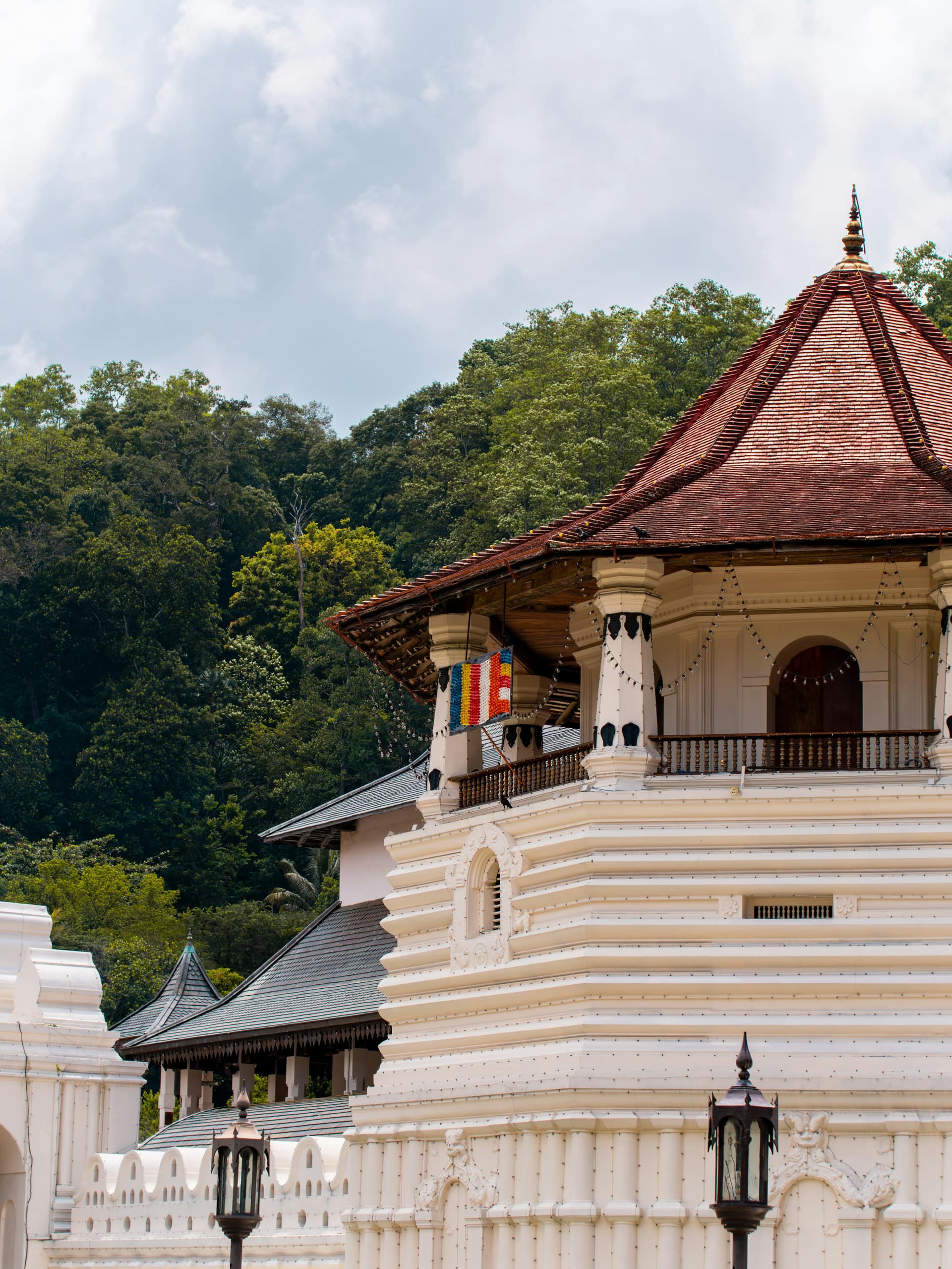
The Jaya Sri Maha Bodhi in Anuradhapura, grown from a cutting of the tree under which the Buddha gained enlightenment, is the most sacred tree in the Buddhist world for many. Pilgrims come daily with flowers and offerings. The Temple of the Sacred Tooth Relic in Kandy, holding the island's most important relic, draws crowds to its evening pujas.
The Atamasthana, the sixteen sacred places of Sinhala Buddhism, include Mahiyangana, Kelaniya, Mihintale, Nagadeepa on Nainativu island and Kataragama's Kiri Vehera. Kelaniya, near Colombo, is believed to have been visited by the Buddha and has fine murals.
On Poya days, temples fill with people dressed in white, observing precepts, chanting and meditating.
Mahiyangana, on the Mahaweli river east of Kandy, is believed to mark the Buddha's first visit to the island, and its stupa draws pilgrims especially in the months around its festival. Mihintale, near Anuradhapura, fills with white-clad crowds at the Poson full moon in June, which marks the arrival of Buddhism.
- →Sri Maha Bodhi: the sacred tree.
- →Temple of the Tooth: the relic.
- →Kelaniya and Mahiyangana: the Buddha's visits.
Hindu pilgrimage sites
Nallur Kandaswamy Kovil in Jaffna, a golden-towered temple to Murugan, is the heart of Tamil Hindu life in the north. Its annual festival, usually in July or August, draws huge crowds. Men remove their shirts to enter.
Koneswaram, on Swami Rock in Trincomalee, is one of the five ancient Shiva temples of Sri Lanka, with views over the sea. Munneswaram, near Chilaw, is another ancient Shiva temple, linked with the Ramayana, and Thiruketheeswaram near Mannar a third. Nainativu's Naga Pooshani Amman Kovil is an important goddess temple.
- →Nallur: the north's great temple.
- →Koneswaram and Munneswaram: ancient Shiva temples.
- →Nainativu: the goddess temple.
Christian and Muslim pilgrimage sites
Madhu church, in the forest of Mannar district, is the most important Catholic shrine in Sri Lanka, with festivals in July and August drawing pilgrims of several faiths. St Anthony's Church at Kochchikade in Colombo is visited by people of all religions, especially on Tuesdays.
Daftar Jailani, a cave shrine near Balangoda, is an important Muslim pilgrimage site, linked to the Sufi saint Abdul Qadir Jilani, set on a rocky ridge with wide views. Mosques such as Kechimalai in Beruwala and the Devatagaha mosque in Colombo also draw visitors.
Lankan Stays & Trails can time a route to include a festival or a Poya day, which turns a sightseeing visit into a living experience.
- →Madhu: the Catholic shrine.
- →Kochchikade: open to all faiths.
- →Daftar Jailani: a Sufi cave shrine.
Visiting sacred sites respectfully
Dress modestly, covering shoulders and knees, and remove shoes and hats where required. At Hindu temples, men may need to remove shirts. At mosques, women should cover their heads. Ask before photographing worshippers, and never pose with your back to a Buddha image.
Festivals and Poya days are the most atmospheric but busiest times. Dates follow lunar calendars and shift each year, so check locally when planning.
Frequently asked questions
What is the most sacred place in Sri Lanka?
For Buddhists, the most sacred places in Sri Lanka are the Jaya Sri Maha Bodhi in Anuradhapura and the Temple of the Sacred Tooth Relic in Kandy. Adam's Peak and Kataragama are sacred to several faiths at once, which makes them unique.
Which pilgrimage sites are shared by several religions?
Adam's Peak is shared by Buddhists, Hindus, Muslims and Christians, each with their own interpretation of the footprint at the summit. Kataragama is sacred to Hindus, Buddhists, Muslims and the Vedda people. St Anthony's in Colombo draws worshippers of all faiths.
When is the pilgrimage season for Adam's Peak?
The pilgrimage season for Adam's Peak runs roughly from the December full moon to the Vesak full moon in May. During this time the path is lit, tea stalls are open and pilgrims climb overnight to reach the summit for sunrise.
Can non-Buddhists visit Buddhist pilgrimage sites?
Non-Buddhists are welcome at Buddhist pilgrimage sites in Sri Lanka. Dress modestly, remove shoes and hats, walk clockwise around stupas and behave quietly. Never pose with your back to a Buddha image or touch statues.
When is the Kataragama festival?
The Kataragama festival usually takes place in July or August, ending on the Esala full moon. Dates follow the lunar calendar and shift each year. It features processions, fire-walking and pilgrims who have walked long distances. Check exact dates locally.
What is Daftar Jailani?
Daftar Jailani is a Muslim cave shrine near Balangoda, associated with the Sufi saint Abdul Qadir Jilani. It sits on a rocky ridge with wide views and draws pilgrims, especially during its annual festival. Visitors should dress modestly and behave respectfully.
What is a Poya day?
A Poya day is the full moon day of each month, a public holiday in Sri Lanka and an important day for Buddhists, who visit temples, observe precepts and meditate. Alcohol and meat sales are usually restricted. Temples are busiest and most atmospheric on these days.