
Quick answer
The best places in Sri Lanka for wildlife photographers are Yala for leopards on rock outcrops in low morning light, Wilpattu for quieter leopard and sloth bear encounters, Minneriya and Kaudulla for elephant herds in golden dust from roughly July to October, Gal Oya for elephants in water, Bundala for flamingos and waterbirds, Sinharaja for endemic birds in low forest light, and Mirissa for whales at sea. A 100 to 400 mm or longer lens covers most situations, and early mornings give the best light.
Key takeaways
- Yala's rock outcrops give photographers clean backgrounds for leopards in the early morning light.
- The elephant gathering at Minneriya and Kaudulla offers herds in golden late-afternoon light, roughly July to October.
- Gal Oya is the best place to photograph elephants in water, from boats on the reservoir.
- Sinharaja's endemic birds need fast lenses and high ISO in the dim forest light.
- A lens of 100 to 400 mm, or longer, covers most wildlife situations in Sri Lanka.
Why Sri Lanka suits wildlife photographers
Sri Lanka suits wildlife photographers because a single trip can cover big cats, elephants, birds and whales in very different settings. Distances are short, and the light in the dry zone is often clean and warm in the early morning and late afternoon.
The challenges are crowds at the most famous parks, harsh midday light and the dim interiors of rainforests. Choosing the right places and times makes a big difference.
The best places to see wildlife for photographers
The best places in Sri Lanka for wildlife photographers each offer something specific, from cats on rocks to birds in flight.
Combining a dry-zone park, a wetland and a rainforest covers the widest range of subjects and light.
- →Yala National Park: leopards on rocks, sloth bears, elephants and birds.
- →Wilpattu National Park: quieter leopards and sloth bears around the villus.
- →Minneriya and Kaudulla: elephant herds in golden dust.
- →Gal Oya National Park: elephants in water from a boat.
- →Bundala National Park: flamingos, storks and waterbirds.
- →Sinharaja Forest Reserve: endemic birds in low forest light.
- →Mirissa and Trincomalee: whales at sea.
Photographing leopards and elephants
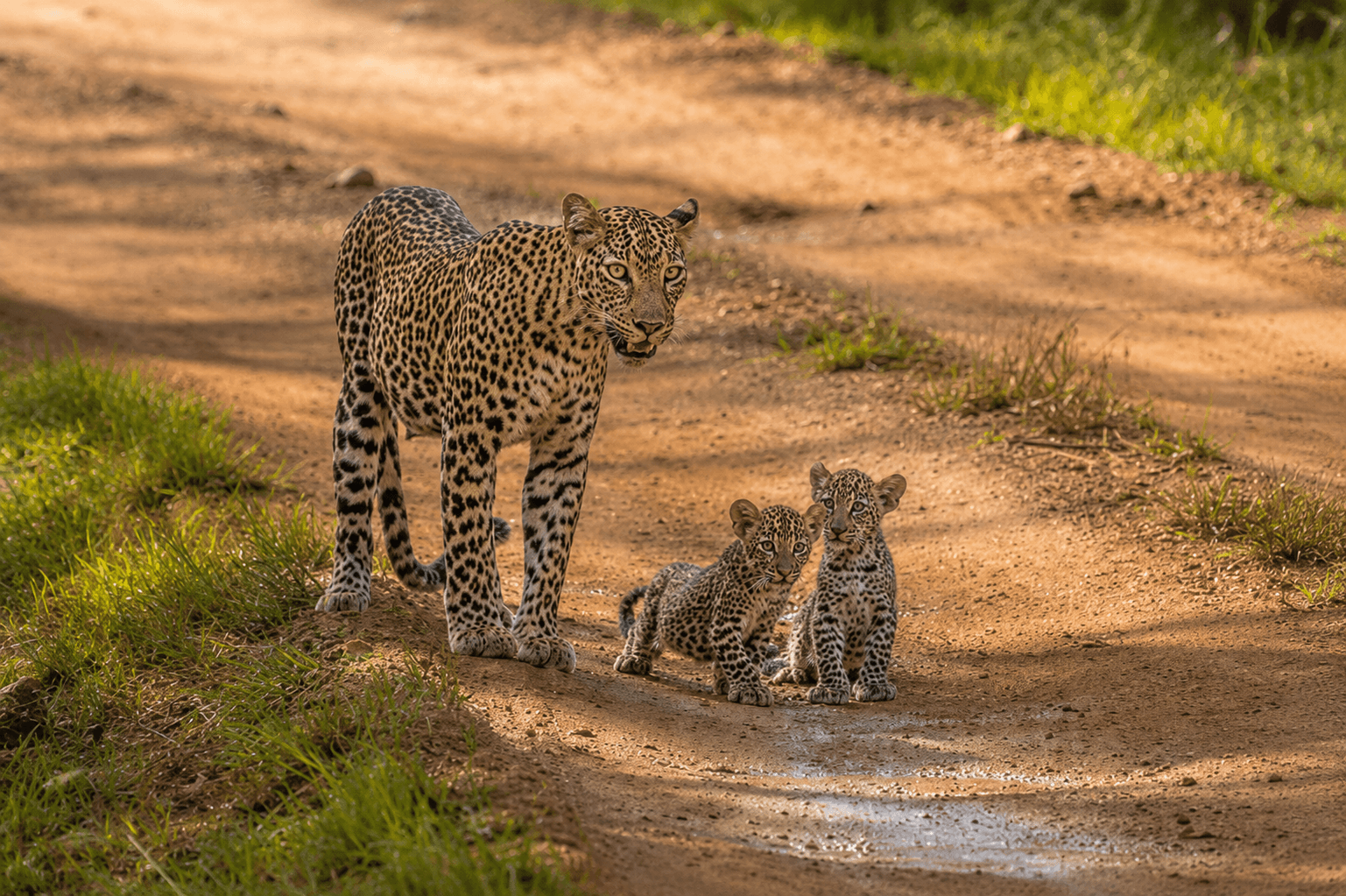
Yala is Sri Lanka's best place to photograph leopards, especially on the rock outcrops of Block 1, where cats rest in clean, elevated positions. Early morning light is softest. The challenge is jeep crowds around sightings, so choose drivers who position quietly and wait.
For elephants, Minneriya and Kaudulla offer herds in golden late-afternoon light and dust during the gathering. Gal Oya gives elephants in water, and Udawalawe gives close, relaxed herds on open grassland in any month.
- →Yala: leopards on rocks at dawn.
- →Minneriya: herds in golden dust.
- →Gal Oya: elephants in water.
Photographing birds
Sri Lanka's bird photography ranges from waterbirds on open lagoons to endemics in dark forest. Bundala, Kumana and the Tissamaharama lakes offer flamingos, storks, pelicans and waders in open light. Yala and Udawalawe have bee-eaters, rollers, kingfishers and raptors on perches close to the tracks.
Sinharaja's endemics, such as the blue magpie and red-faced malkoha, move through dim forest, so a fast lens and high ISO are needed. Horton Plains offers highland endemics in cooler, softer light.
- →Bundala and Kumana: waterbirds in open light.
- →Yala and Udawalawe: perched birds near the tracks.
- →Sinharaja: endemics in dim forest.
Lenses, light and practical tips
A lens of 100 to 400 mm, or longer, covers most wildlife situations in Sri Lanka. A wide lens is useful for elephant herds and landscapes. A beanbag helps steady long lenses on jeep sides. Dust is common in the dry season, so bring cleaning kit and rain covers for sudden showers.
The best light is in the first and last two hours of the day. Lankan Stays & Trails can arrange private jeeps for photographers, with drivers who understand positioning and patience.
Photographers spending several days at Yala or Wilpattu often book full-day drives, which keep them inside the park through the middle of the day and allow them to stay with a sighting rather than racing back to the gate.
Photographing ethically
Wildlife photography in Sri Lanka should never come at the animal's expense. Do not ask drivers to crowd, chase or block animals, avoid flash on nocturnal animals and turtles, and never bait wildlife. Keep noise down and give animals space to move.
Responsible photography also means respecting park rules on staying inside vehicles and keeping to tracks.
Frequently asked questions
Where is the best place to photograph leopards in Sri Lanka?
Yala National Park, especially Block 1, is the best place to photograph leopards, as cats often rest on rock outcrops in clean, elevated positions. Early morning light is softest. Wilpattu offers quieter encounters but in denser forest.
What lens do I need for wildlife photography in Sri Lanka?
A lens of 100 to 400 mm, or longer, covers most situations. A 500 or 600 mm lens helps for birds and distant leopards. A wide lens is useful for elephant herds and landscapes. A beanbag helps steady long lenses on jeep sides.
Can I hire a private jeep for photography in Sri Lanka?
Yes. Private jeeps can be hired at all main parks, giving photographers control over positioning and time at sightings. Choose drivers who understand photography and positioning, and who will not crowd animals. Full-day permits are available at some parks.
When is the best light for wildlife photography in Sri Lanka?
The best light is in the first and last two hours of the day, when it is soft and warm. Midday light in the dry zone is harsh. Parks usually open around 6 am and close around 6 pm, giving good early and late opportunities.
Where can I photograph elephants in Sri Lanka?
Minneriya and Kaudulla offer large herds in golden light during the gathering, roughly July to October. Gal Oya gives elephants in water, and Udawalawe gives close, relaxed herds in any month. Each offers a different style of image.
Is Sinharaja good for bird photography?
Sinharaja is excellent for endemic birds, but photography is challenging in the dim forest light. Use a fast lens, high ISO and patience, and work with a guide who knows where flocks move. Mixed feeding flocks can bring many species into view at once.
How do I photograph wildlife ethically in Sri Lanka?
Do not ask drivers to crowd, chase or block animals, avoid flash on nocturnal animals and turtles, never bait wildlife and keep noise down. Give animals space to move, and follow park rules on staying inside vehicles and on tracks.