
Quick answer
Of Sri Lanka's ten best-known places, the Nine Arch Bridge at Ella and Yala Block 1 are the most consistently crowded, followed by Sigiriya and Galle Fort through the middle of the day. Anuradhapura, Polonnaruwa and the quieter south coast beaches at Talalla and Tangalle carry the lowest visitor pressure. Most of the ten flip from busy to quiet within about an hour of the peak window ending.
Key takeaways
- The Nine Arch Bridge and Yala Block 1 carry the heaviest visitor pressure of the ten.
- Sigiriya and Galle Fort are busy through the middle of the day and clear substantially outside it.
- Anuradhapura is the quietest of the major sites because its scale disperses visitors across kilometres.
- Yala is the only one where crowding is structural rather than schedulable.
- The May to September window reduces pressure at every inland site substantially.
The ten ranked, busiest to quietest
Ranked by visitor pressure at their respective peak hours, the ten run roughly: the Nine Arch Bridge at Ella, Yala Block 1, Sigiriya, Galle Fort, the Temple of the Sacred Tooth Relic at Kandy, Mirissa beach, Dambulla, Nuwara Eliya, Polonnaruwa and Anuradhapura.
That ranking is about density rather than absolute numbers. Anuradhapura may receive a great many visitors, but they are dispersed across a sacred landscape of many kilometres, so it never feels busy. The Nine Arch Bridge receives fewer and concentrates them on one viewpoint at one moment.
This distinction matters when planning. Sites that disperse visitors, such as Anuradhapura and Polonnaruwa, can be visited at any hour without much penalty. Sites that concentrate them, such as the bridge and Sigiriya's upper stairs, reward precise timing.
- →Busiest: the Nine Arch Bridge, Yala Block 1, Sigiriya, Galle Fort.
- →Middle: the Temple of the Sacred Tooth Relic, Mirissa, Dambulla, Nuwara Eliya.
- →Quietest: Polonnaruwa and Anuradhapura.
- →Density matters more than total numbers; dispersal is what keeps a site calm.
The hours at which each one flips
Most of the ten change character within about an hour of a specific time, and knowing those times is more useful than knowing the ranking. The Nine Arch Bridge flips around mid-morning, when crowds build for each scheduled train crossing, and again in reverse in the late afternoon.
Sigiriya flips around mid-morning as queues build on the one-way upper stairways and the stone begins radiating heat. Galle Fort flips the other way, around five in the afternoon, when day visitors leave and the town becomes the place its descriptions are about.
The Temple of the Sacred Tooth Relic concentrates around puja times, of which there are typically three daily, and is quiet between them. Mirissa's central strip fills through the day and empties at either end of the beach, which is a spatial flip rather than a temporal one.
- →Nine Arch Bridge: crowds build from mid-morning around each train crossing.
- →Sigiriya: queues and heat build from mid-morning on the upper stairs.
- →Galle Fort: flips the other way, clearing from around five in the afternoon.
- →The Kandy temple concentrates around puja times and is quiet between them.
Yala, where timing does not help
Yala Block 1 is the exception to everything above, because its crowding is structural. Leopards concentrate in that block, every operator knows where, and radio communication between drivers means a sighting draws vehicles within minutes regardless of the hour.
Entering at opening addresses the gate queue but not the sightings problem, because every other jeep entered at opening too. There is no time of day at which Block 1 is quiet during high season.
The only genuine mitigations are to request a driver who will wait patiently away from a scrum rather than join it, or to choose a different park. Wilpattu is Sri Lanka's largest and carries far fewer vehicles; Udawalawe carries more than Wilpattu but far fewer than Yala.
- →Leopards concentrate in Block 1 and radio traffic draws jeeps within minutes.
- →No hour of the day is quiet in Block 1 during high season.
- →Request a driver who waits rather than chases reported sightings.
- →Wilpattu and Udawalawe are the structural answers rather than timing ones.
The genuinely quiet ones
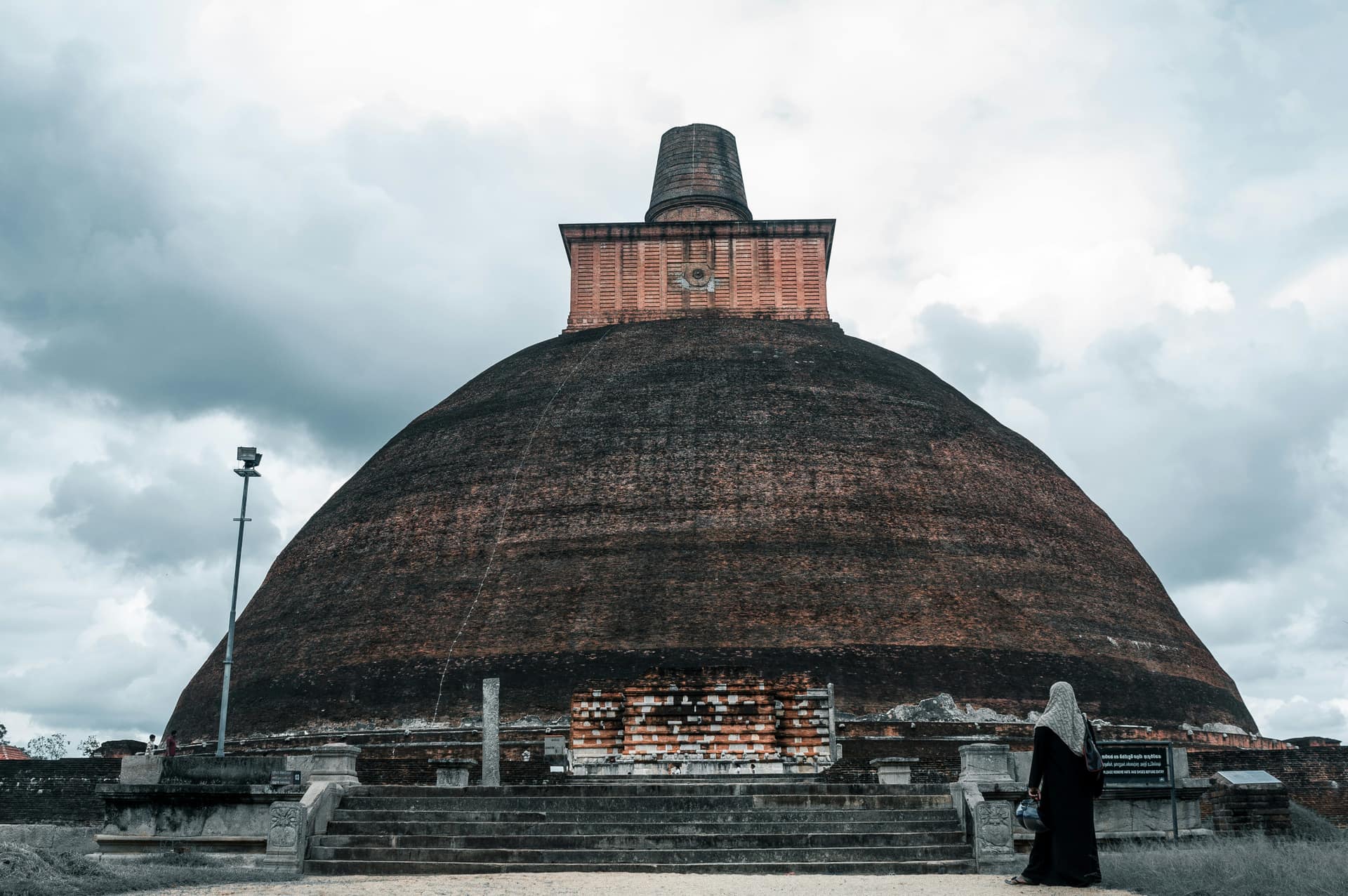
Anuradhapura is the quietest of Sri Lanka's major sites, and the reason is scale. The monuments sit kilometres apart across a sacred landscape, so even substantial visitor numbers disperse to the point of invisibility. A traveller can stand at a dagoba with almost nobody else present in high season.
Polonnaruwa is quieter than its profile suggests for a similar reason. The site runs several kilometres along a single route and most visitors cover it by bicycle, which spreads them out naturally rather than concentrating them at a single viewpoint.
On the coast, Talalla and Tangalle are the quiet options, roughly an hour east of Mirissa. Talalla in particular is a long crescent with very little development, and it is the closest thing on the south coast to an empty beach with decent accommodation available.
- →Anuradhapura: scale disperses visitors across many kilometres.
- →Polonnaruwa: a linear site covered by bicycle, which spreads people out.
- →Talalla and Tangalle: the quiet south coast options, roughly an hour east of Mirissa.
- →Haputale and Lipton's Seat: the quiet hill country alternative to Ella.
How the seasons shift the whole picture
Everything above describes high season, roughly December to March, when visitor numbers concentrate on the south coast and hill country. That window carries by far the heaviest pressure at every site on the list.
Between roughly May and September the picture changes substantially at the inland sites. The Cultural Triangle sits in the dry zone and remains fully reliable while carrying far fewer visitors, which makes it an unusually good time to see Sigiriya, Polonnaruwa and Anuradhapura with space around them.
The shoulder months of April, October and November are quieter again at most sites, at the cost of unpredictable weather on both coasts. For travellers who value space over guaranteed sunshine, that is the best trade available in the Sri Lankan calendar.
- →December to March carries the heaviest pressure at every site on the list.
- →May to September is substantially quieter inland, with the dry zone still reliable.
- →April, October and November are quietest but least predictable on the coasts.
- →The inland sites barely change in quality between these windows.
Sequencing a first trip for space
A first trip planned around this ranking looks slightly different from one planned around driving convenience. Sigiriya and the Nine Arch Bridge go at dawn, Galle Fort goes in the evening, the Kandy temple goes at a puja time, and the safari goes to Udawalawe or Wilpattu rather than Yala.
None of that removes anything from the itinerary; it reorders the hours within it. Lankan Stays and Trails schedules around site timings rather than driving convenience as standard, which occasionally means reversing the order of a day, and it is the single adjustment that most changes how a busy first trip feels.
Frequently asked questions
What is the most crowded place in Sri Lanka?
The Nine Arch Bridge at Ella and Yala Block 1 carry the heaviest visitor pressure. The bridge concentrates people at one viewpoint around each scheduled train crossing, and Yala Block 1 draws jeeps to any leopard sighting within minutes through radio contact.
What is the quietest of Sri Lanka's major sites?
Anuradhapura, because its scale disperses visitors across a sacred landscape of many kilometres. Even substantial numbers become invisible, and a traveller can stand at a major dagoba with almost nobody else present, even in high season.
What time does Sigiriya get busy?
From around mid-morning, when queues build on the one-way upper stairways and the stone begins radiating heat. Arriving at opening, typically around seven, gives both a cooler climb and a substantially clearer route up.
When is Galle Fort quietest?
After around five in the afternoon, when day visitors leave, and early in the morning. Galle is the exception to Sri Lanka's early-start rule, being busiest and hottest through the middle of the day and at its best in the evening.
Can you avoid crowds at Yala?
Not by timing, since the crowding is structural. Leopards concentrate in Block 1, radio traffic draws jeeps within minutes, and every vehicle enters at opening. The genuine answers are a driver who waits patiently rather than chasing, or a different park.
Which month is least crowded in Sri Lanka?
The shoulder months of April, October and November are quietest at most sites, at the cost of unpredictable coastal weather. Roughly May to September is substantially quieter than peak season inland, with the dry-zone Cultural Triangle remaining fully reliable.
Is Polonnaruwa crowded?
Less than its profile suggests. The site runs several kilometres along a single route and most visitors cover it by bicycle, which spreads people out naturally rather than concentrating them at one viewpoint as happens at Sigiriya or the Nine Arch Bridge.