
Quick answer
Most crowding at Sri Lanka's top sites is solved by timing rather than avoidance: arrive at opening at Sigiriya, at dawn at the Nine Arch Bridge, and after five in the afternoon at Galle Fort. Where timing is not enough, substitute a quieter equivalent: Pidurangala for Sigiriya's view, Haputale for Ella, and Wilpattu or Udawalawe for Yala, whose Block 1 jeep crowding cannot be avoided by timing alone.
Key takeaways
- Sigiriya, the Nine Arch Bridge and Galle Fort all clear substantially outside peak hours.
- Yala Block 1 is the one place where crowding is structural and timing alone does not fix it.
- Haputale and Lipton's Seat offer tea country views with a fraction of Ella's visitor numbers.
- Wilpattu is Sri Lanka's largest national park and carries far fewer vehicles than Yala.
- The May to September window is substantially quieter across the Cultural Triangle and hill country.
Timing solves most of it
The majority of crowding complaints in Sri Lanka trace back to arriving at a site between roughly nine in the morning and four in the afternoon, which is when coach groups and day visitors are present. Outside that window the same places are often close to empty.
Sigiriya at opening, around seven, is a genuinely different experience from Sigiriya at eleven, both in queue length on the one-way upper stairs and in how the heat feels. The Nine Arch Bridge shortly after dawn is often nearly deserted; by late morning several hundred people gather around each train crossing.
Galle Fort inverts the pattern, clearing from around five in the afternoon when day visitors leave. Between them, these three adjustments cover most of what first-time visitors complain about, and none of them costs anything except an alarm.
- →Most crowding occurs between roughly nine in the morning and four in the afternoon.
- →Sigiriya at opening has shorter queues on the one-way upper stairs.
- →The Nine Arch Bridge is often nearly empty shortly after dawn.
- →Galle Fort clears from around five in the afternoon.
Where a quieter substitute works
Some crowding is better solved by going somewhere else entirely. Pidurangala, the rock next to Sigiriya, carries far fewer visitors than Sigiriya itself and gives the classic view of it. It is cheaper and shorter at roughly forty-five minutes, though it ends in a boulder scramble rather than a staircase.
Haputale substitutes for Ella for travellers who want tea country without the visitor density. Lipton's Seat gives a comparable viewpoint experience with a fraction of the numbers, and the surrounding estate walking is quieter throughout. The trade is fewer restaurants and less evening activity.
Riverston and the Mini World's End area near Matale substitute for Horton Plains, offering escarpment views on a clear day with far fewer visitors and a shorter, easier walk. It does not have Horton Plains' high grassland character, but it also does not require a pre-dawn start.
- →Pidurangala: the classic Sigiriya view with far fewer people.
- →Haputale and Lipton's Seat: tea country views, a fraction of Ella's numbers.
- →Riverston and Mini World's End: escarpment views without the pre-dawn start.
- →Talalla and Tangalle: quieter beaches roughly an hour east of Mirissa.
Yala, where timing does not fix it
Yala Block 1 is the clearest case in Sri Lanka where crowding is structural rather than schedulable. Leopards concentrate in that block, every operator knows where, and radio communication between drivers means a sighting draws vehicles within minutes regardless of the hour.
Entering at opening helps with the gate queue but not with the sightings problem, because every other jeep entered at opening too. The genuine mitigations are to request a driver who will wait quietly away from a scrum rather than join it, and to consider the less-visited blocks.
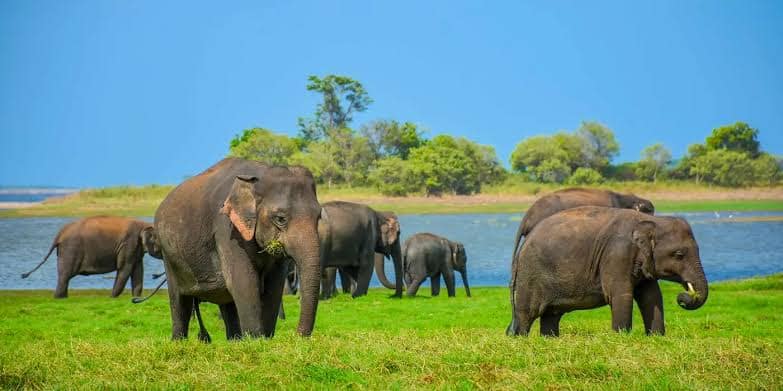
The real answer for travellers who want a calm wildlife experience is a different park. Wilpattu is Sri Lanka's largest, characterised by natural lakes called villus, and carries far fewer vehicles with a wilder feel. Udawalawe has more vehicles than Wilpattu but far fewer than Yala, with near-certain elephant sightings in open grassland.
- →Leopards concentrate in Block 1 and radio traffic draws jeeps within minutes.
- →Entering at opening does not help, since every jeep does the same.
- →Request a driver who waits quietly rather than chasing reported sightings.
- →Wilpattu and Udawalawe are the genuine answers for a calmer drive.
The seasonal dimension
Visitor numbers in Sri Lanka concentrate heavily between December and March, when the south coast and hill country are at their best. The Cultural Triangle, Ella and Galle are all noticeably busier in that window than at any other point in the year.
Between roughly May and September the same sites carry substantially fewer visitors. The south-west monsoon affects the coast and the hill country, but the Cultural Triangle sits in the dry zone and remains reliable, which makes it an unusually good time to see Sigiriya, Polonnaruwa and Anuradhapura with space around them.
The shoulder months of April, October and November are quieter still at most sites, at the cost of unpredictable weather on both coasts. For travellers who value space over guaranteed sunshine, they are the best trade available in the Sri Lankan calendar.
- →December to March carries by far the heaviest visitor numbers.
- →May to September is substantially quieter across the Cultural Triangle.
- →The dry-zone ancient sites remain reliable in the wet months.
- →April, October and November are quietest but least predictable on the coasts.
Small moves that make a difference
Within busy sites, small adjustments help more than expected. At Mirissa, the eastern end towards Coconut Tree Hill and the western end near the harbour are noticeably calmer than the central strip. At Galle Fort, the western ramparts hold most of the sunset crowd while the northern sections stay quiet.
Days of the week matter around religious sites. Poya days, which fall on each full moon, bring very large numbers of domestic pilgrims to Anuradhapura, Kataragama and the Temple of the Sacred Tooth Relic. That is worth seeking out as an experience or avoiding as a crowd, but not encountering by accident. Lunar dates shift each year.
Local school holidays and long weekends also produce domestic travel surges, particularly to the hill country and the beaches. These are harder to plan around from abroad, but a local operator will know them and can shift a day accordingly.
- →At Mirissa, the eastern and western ends are calmer than the centre.
- →At Galle Fort, the northern ramparts stay quieter than the western sunset stretch.
- →Poya days bring large numbers of domestic pilgrims; lunar dates shift each year.
- →Local school holidays produce surges to the hill country and beaches.
Planning a quieter first trip
A first trip planned for space rather than convenience looks slightly different: sites scheduled at opening or after five, one or two substitutions in favour of quieter equivalents, a safari at Udawalawe or Wilpattu rather than Yala, and travel dates outside December to March if that is possible.
None of those changes removes anything important. Lankan Stays and Trails schedules around site timings rather than driving convenience as standard, which occasionally means reversing the order of a day, and it is the single adjustment that most changes how a busy first trip feels.
Frequently asked questions
How do I avoid crowds in Sri Lanka?
Mostly by timing. Arrive at opening at Sigiriya, at dawn at the Nine Arch Bridge, and after five in the afternoon at Galle Fort. Where timing is not enough, substitute a quieter equivalent such as Pidurangala, Haputale or a less-visited national park.
Is Yala too crowded with jeeps?
Block 1 genuinely is, and it is the one place in Sri Lanka where timing does not fix it. Leopards concentrate there and radio traffic draws vehicles within minutes. Wilpattu and Udawalawe are the real answers for a calmer wildlife experience.
What is a quieter alternative to Ella?
Haputale, which offers comparable tea country views and access to Lipton's Seat with a fraction of the visitor numbers. The trade-off is fewer restaurants and less evening activity than Ella, which has a developed cafe and guesthouse scene.
When is Sri Lanka least crowded?
Roughly May to September at the inland sites, when the south-west monsoon affects the coast but the dry-zone Cultural Triangle remains reliable. The shoulder months of April, October and November are quieter still, at the cost of unpredictable coastal weather.
Is Pidurangala less crowded than Sigiriya?
Generally yes, and it gives the classic view of Sigiriya itself. It is cheaper and shorter at roughly forty-five minutes, though it ends in a boulder scramble rather than a staircase, so it is not an easier climb for anyone concerned about mobility.
What are poya days and do they affect crowds?
Poya days fall on each full moon and are public holidays. They bring very large numbers of domestic pilgrims to Anuradhapura, Kataragama and the Temple of the Sacred Tooth Relic. Worth seeking as an experience or avoiding as a crowd; lunar dates shift each year.
Which part of Mirissa beach is quietest?
The eastern end towards Coconut Tree Hill and the western end near the harbour are both noticeably calmer than the central strip, which carries the highest concentration of loungers and music. Talalla and Tangalle, roughly an hour east, are quieter again.