
Quick answer
Kandy is worth it on a first trip to Sri Lanka, mainly for the Temple of the Sacred Tooth Relic and for its position as the gateway to the hill country. It was the last independent Sinhalese kingdom, falling in 1815, and the temple houses Sri Lanka's most venerated Buddhist relic. Kandy is a busy working city rather than a scenic town, so one or two nights is usually right, and expectations of a tranquil hill retreat are misplaced.
Key takeaways
- Kandy was the capital of the last independent Sinhalese kingdom, which fell to the British in 1815.
- The Temple of the Sacred Tooth Relic houses Sri Lanka's most venerated Buddhist relic, and is the single reason most itineraries stop here.
- Kandy is a congested working city of real size, not a quiet hill town, and arriving expecting the latter is the main cause of disappointment.
- One or two nights is the right length; the city rewards an evening more than a full day of sightseeing.
- It sits at the junction of the Cultural Triangle and the hill country, and the Kandy to Ella train starts here.
The verdict on Kandy for a first-time visitor
Kandy is worth it, but for narrower reasons than most itineraries imply. It earns its place through one exceptional site, one genuinely atmospheric evening ritual, and a position on the map that makes it almost unavoidable between the Cultural Triangle and the hill country.
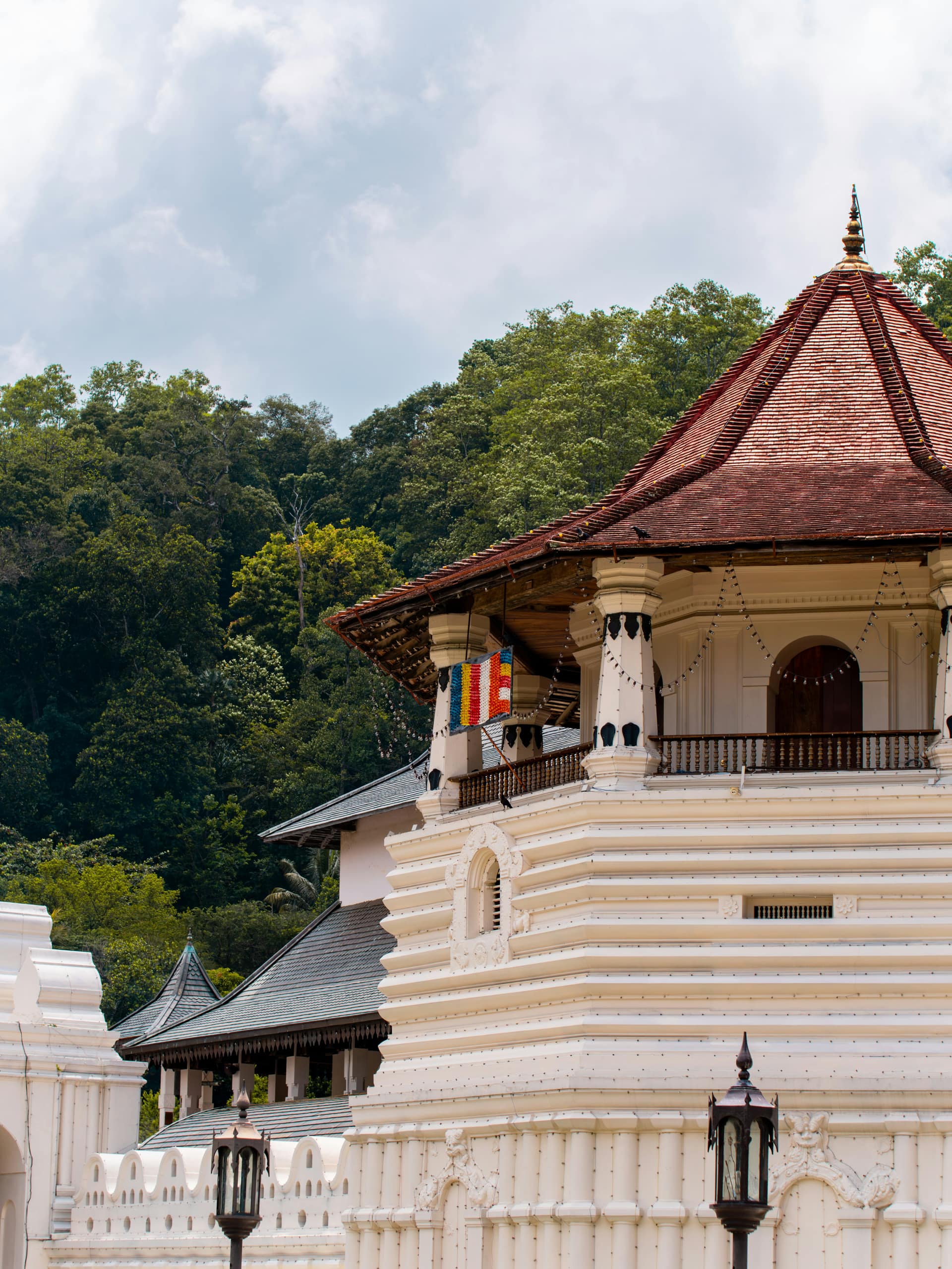
The Temple of the Sacred Tooth Relic, Sri Dalada Maligawa, houses a tooth relic of the Buddha that has been a symbol of sovereignty in Sri Lanka for centuries: historically, whoever held the relic held the right to rule. It remains the most important Buddhist site in the country and an active pilgrimage destination rather than a monument.
Where Kandy disappoints is in the gap between reputation and reality. It is often described as a serene hill capital around a lake, and it is a city of substantial size with heavy traffic, a busy commercial centre and limited pavement. The lake is pleasant; the streets around it are loud.
- →The Temple of the Sacred Tooth Relic is the single strongest reason to stop.
- →Kandy was the last independent Sinhalese kingdom, falling in 1815.
- →It is a working city with real traffic, not a tranquil hill retreat.
- →Its position makes it the natural bridge between the Cultural Triangle and the hill country.
What Kandy costs in trip days
Kandy costs one or two nights, and the difference between those two options matters more here than at most stops. One night covers the temple at evening puja and a walk by the lake, which is genuinely enough for many first-time visitors.
Two nights makes sense if the Peradeniya Royal Botanic Gardens are on the list, if a Kandyan dance performance appeals, or if the schedule needs a slower day between the Cultural Triangle and the hill country. Three nights is rarely justified on a first trip.
Getting there is the other cost. Sigiriya to Kandy takes roughly three to four hours on winding roads, and Kandy to Nuwara Eliya another three or so. These are slow, scenic drives rather than quick transfers, and planning them as half-days rather than hops prevents a lot of frustration.
- →One night: the temple at evening puja and the lake. Enough for many first-timers.
- →Two nights: adds Peradeniya gardens, a dance performance, or simply a slower day.
- →Sigiriya to Kandy: roughly three to four hours on winding roads.
- →Kandy to Nuwara Eliya: roughly three hours, or take the train for the scenery.
Visiting the Temple of the Sacred Tooth Relic
The Temple of the Sacred Tooth Relic is best visited during one of the daily puja ceremonies, when drummers play in the corridors and the chamber holding the relic casket is opened for viewing. The atmosphere during puja is entirely different from the building at a quiet hour, and it is what turns a temple visit into the memory people describe later.
Puja times are set and there are typically three each day, with the evening ceremony the most atmospheric for most visitors. Confirm current times locally, as they are occasionally adjusted, and arrive well before the stated hour because queues build quickly.
The relic itself is not visible: what is displayed is the outermost of a series of nested caskets. Visitors who arrive expecting to see the tooth are always disappointed, and knowing this in advance removes the only real letdown of the visit. Dress code is strict, with shoulders and knees covered and shoes removed.
- →Visit during a puja ceremony; there are typically three daily, with evening the most atmospheric.
- →Confirm current puja times locally and arrive well before them, as queues build.
- →The relic is not visible; the outermost casket is what is displayed.
- →Shoulders and knees covered, shoes removed, and white clothing common among pilgrims.
What else Kandy offers a first-time visitor
Kandy Lake, built by the last king of Kandy in 1807, gives the city its one genuinely calm space, and the circuit walk around it takes roughly an hour. Doing it early in the morning, before the traffic builds, is the version worth doing.
The Peradeniya Royal Botanic Gardens sit roughly twenty to thirty minutes outside the city and are the strongest argument for a second night. They cover a large loop of the Mahaweli river and hold a notable orchid house and avenues of enormous tropical trees. Half a day is about right.
Kandyan dance and drumming performances run most evenings at several venues in the city. They are staged for visitors rather than ceremonial, which some travellers mind and others do not, but the drumming in particular is genuinely skilled and the costumes are spectacular.
- →Kandy Lake: roughly an hour to walk, best early before traffic builds.
- →Peradeniya Royal Botanic Gardens: roughly twenty to thirty minutes away, half a day well spent.
- →Kandyan dance performances run most evenings; staged for visitors but genuinely skilled.
- →The Esala Perahera procession falls around July or August, with dates shifting each year.
Who should skip Kandy, and who should not
Almost nobody on a standard first-trip route should skip Kandy entirely, because the road and rail network makes avoiding it awkward. What some travellers should do instead is treat it as a stop rather than a stay: visit the temple in the late afternoon, then continue to a quieter base in the hills.
Travellers who dislike cities, or who are already finding the trip busy, benefit most from that approach. The countryside around Kandy, and the tea-estate areas towards Nuwara Eliya, offer the calm that the city itself does not.
Travellers who should give Kandy two nights are those interested in Buddhist practice, in colonial and Kandyan history, or in the botanical gardens, and anyone travelling during the Esala Perahera, the great procession of caparisoned elephants, dancers and drummers that falls around July or August. Those dates shift each year with the lunar calendar, so confirm them well ahead.
- →Skipping Kandy entirely is awkward; passing through with a temple visit is the alternative.
- →City-averse travellers do better with a countryside base and an afternoon visit.
- →Give it two nights for Buddhist history, Kandyan culture, or the botanical gardens.
- →Esala Perahera falls around July or August; lunar dates shift each year.
Fitting Kandy into a first trip
Kandy works best placed between the Cultural Triangle and the hill country, arriving in the afternoon, attending evening puja at the temple, and leaving the following day by train towards Nanu Oya or Ella. That shape gets the best of the city without asking it to be a resort.
Our dedicated Temple of the Sacred Tooth Relic guide covers the building and its history in full. This article is only about whether Kandy earns a slot on a first trip, and it does, provided a traveller arrives expecting a living city rather than a quiet one. Lankan Stays and Trails generally builds it in for one or two nights and keeps the sightseeing focused.
Frequently asked questions
Is Kandy worth visiting?
Yes, mainly for the Temple of the Sacred Tooth Relic and its position between the Cultural Triangle and the hill country. Kandy is a busy working city rather than a tranquil hill town, so it rewards an evening visit and one or two nights rather than an extended stay.
How many days should I spend in Kandy?
One or two nights. One night covers the temple at evening puja and a walk around Kandy Lake. A second night makes sense if you want the Peradeniya Royal Botanic Gardens, a Kandyan dance performance, or simply a slower day between longer drives.
Is the Temple of the Tooth worth it?
Yes, especially during one of the daily puja ceremonies, when drummers play and the relic chamber is opened. Note that the tooth relic itself is not visible: what is displayed is the outermost of a series of nested caskets. Confirm current puja times locally.
Why do some travellers find Kandy disappointing?
Because it is often described as a serene lakeside hill capital, and it is in fact a substantial working city with heavy traffic and a busy commercial centre. Visitors who arrive expecting a quiet retreat are let down; those expecting a living city with one exceptional temple rarely are.
What is there to do in Kandy besides the temple?
Walk the circuit around Kandy Lake, which takes roughly an hour and is best done early. Visit the Peradeniya Royal Botanic Gardens, roughly twenty to thirty minutes outside the city. Evening Kandyan dance and drumming performances run at several venues most nights.
How far is Kandy from Sigiriya?
Roughly three to four hours by road. The route is winding rather than long, so it is better planned as a half-day transfer than a quick hop. Many first trips break the drive with a spice garden or the Matale area rather than driving it straight through.
When is the Kandy Esala Perahera?
Around July or August, though the exact dates shift each year with the lunar calendar and should be confirmed well ahead. The procession features caparisoned elephants, dancers and drummers over several nights, and accommodation in Kandy books out far in advance for it.