
Quick answer
Mirissa in January has dry, sunny weather of about 30°C, calm seas in the bay and the heart of the whale-watching season, with boats leaving at dawn and blue whales seen on many trips. Swimming is good in the sheltered part of the bay. Coconut Tree Hill and Parrot Rock are popular at sunset. Expect high-season crowds, especially in the first week of January.
Key takeaways
- January is the heart of Mirissa's whale-watching season.
- The bay is calm and good for swimming.
- Coconut Tree Hill and Parrot Rock are best at sunset.
- The first week of January is the busiest.
- Weligama and Hiriketiya are close for surfing.
Mirissa's weather in January
Mirissa, on the south coast, is dry and sunny in January, with days of about 30°C, warm nights and low rainfall. The sea is calm and warm, about 27 to 28°C, after the rougher swells of the inter-monsoon months.
Calm seas are important for whale watching. January often brings flatter mornings than December, which means fewer cancelled trips and more comfortable boat rides.
Midday sun is strong on the open beach. Shade under palm trees and beach umbrellas is welcome, and a rash vest helps for long swims and snorkelling.
- →Dry and sunny, about 30°C.
- →Calm, warm sea.
- →Strong midday sun.
Whale watching in January
Mirissa's whale season runs roughly from December to April, and January sits in the heart of it. Blue whales, sperm whales and spinner dolphins are seen on many trips, though sightings depend on nature and are never guaranteed.
Boats leave the harbour at dawn and return around midday. Choose an operator that follows the official guidelines on approach distance and speed, even if it costs more, and avoid boats that chase whales.
Take seasickness tablets before boarding and bring a hat, sunscreen and a light layer. Most boats provide breakfast and water.
- →Season: roughly December to April.
- →Boats leave at dawn.
- →Choose responsible operators.
The beach and the bay
Mirissa's main beach curves around a sheltered bay, with calm water at the western end near Parrot Rock. In January, swimming is easy, though the eastern end can have stronger waves.
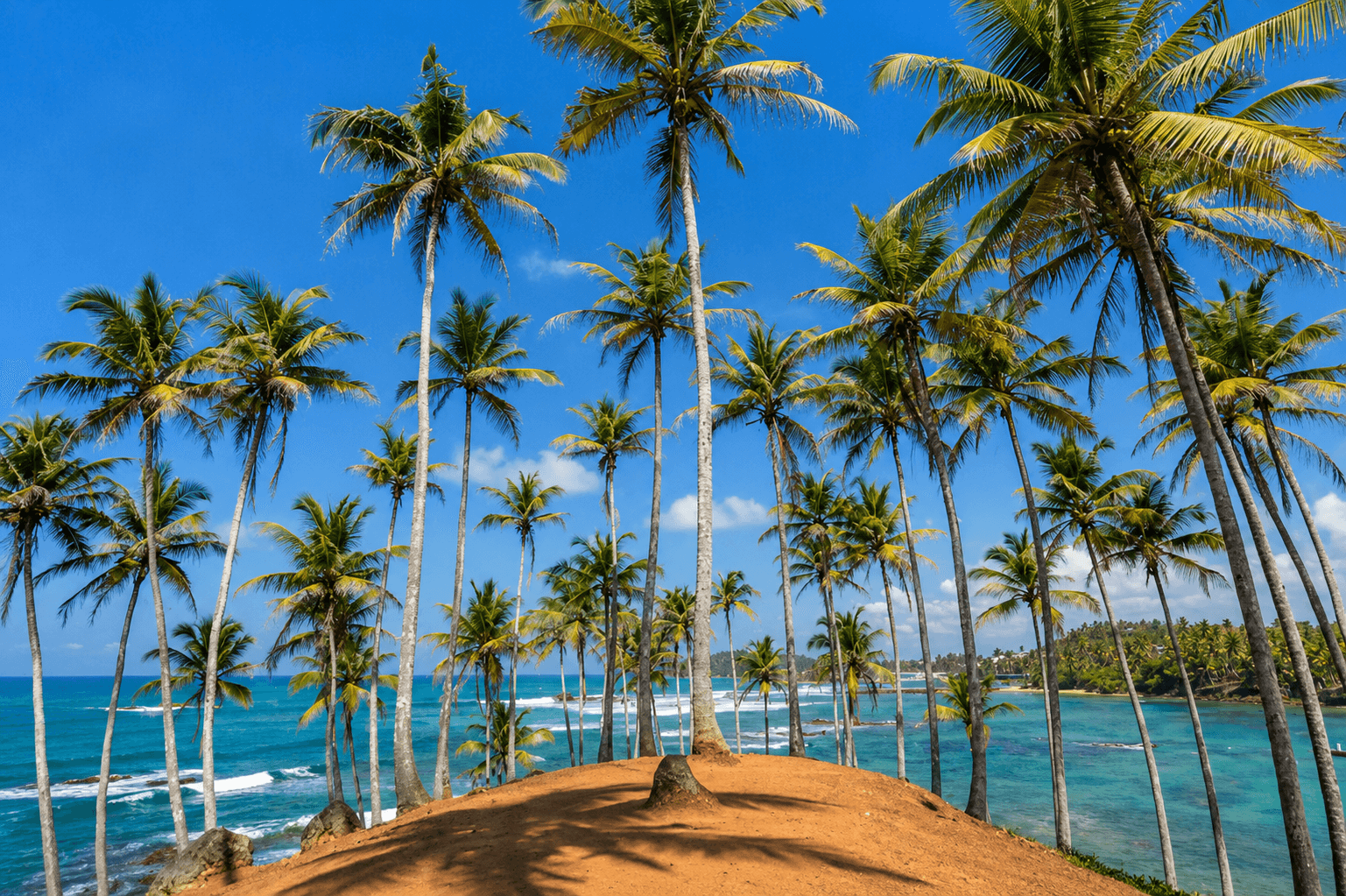
Parrot Rock, a small islet reached by wading at low tide, offers views across the bay. Coconut Tree Hill, a headland covered in palms, is one of the most photographed spots on the coast, best at sunrise or sunset.
Secret Beach, a short tuk-tuk ride away, is a smaller cove with clear water and rock pools, quieter than the main beach in January.
- →Calm swimming at the western end.
- →Parrot Rock and Coconut Tree Hill.
- →Secret Beach for quiet.
Crowds and accommodation
Mirissa is very busy in January. The beachfront fills with sun loungers, restaurants and bars, and the town's guesthouses and hotels book up early, especially for the first week of the month.
Staying a little away from the main beach, on the hillside or in nearby Weligama or Talalla, offers more space and often better value.
Lankan Stays & Trails often arranges a single night in Mirissa for the whale trip, with a longer stay in a quieter bay along the coast for the rest of the beach time.
Prices for rooms, loungers and seafood dinners are higher in January than in the shoulder months, and the cheapest guesthouses fill first. Booking two to three months ahead secures a good room for most of the month, while the first week needs more notice.
Nearby places
Weligama, a few minutes west, has a long sandy bay with gentle waves that are ideal for learning to surf in January. Stilt fishermen can be seen near Koggala and Ahangama.
Hiriketiya, about 40 minutes east, is a small horseshoe bay with surf and cafes. Matara's Dondra Head lighthouse and Polhena's reef are also close.
Galle, about an hour west, makes an easy day trip, with its fort walks and colonial architecture.
- →Weligama for surfing.
- →Hiriketiya's small bay.
- →Galle Fort day trip.
Evenings in Mirissa
Evenings are lively in January. Beach restaurants set up tables on the sand, with fresh seafood displayed for diners to choose. Many bars play music until late, though Mirissa is calmer than some party beaches.
On poya days, alcohol is not sold, and the beachfront is quieter. Duruthu poya in January is a good evening for a seafood dinner and a walk on the beach.
Fresh fruit and juices are easy to find, with pineapple, papaya and king coconut sold along the main road.
Mornings are the quietest time on the beach. Early swimmers have the bay almost to themselves before the loungers fill, and the light at sunrise over Coconut Tree Hill is softer and less crowded than at sunset.
Frequently asked questions
Is Mirissa good in January?
Yes. January is one of the best months for Mirissa, with dry, sunny weather, calm seas and the heart of the whale-watching season. It is busy, especially in the first week of the month, so book accommodation early or stay in a quieter nearby bay.
Can you see whales in Mirissa in January?
Yes. January is in the heart of Mirissa's whale season, which runs roughly from December to April. Blue whales, sperm whales and dolphins are seen on many trips, but sightings are never guaranteed. Calmer January seas make trips more comfortable than in December.
Is the sea calm in Mirissa in January?
Generally, yes. The south coast is in its calm, dry season, and the western end of Mirissa's bay is especially sheltered for swimming. The eastern end can have stronger waves. Always check local conditions and follow any flags or advice from lifeguards or hotel staff.
Is Mirissa crowded in January?
Yes. Mirissa is one of the busiest beach towns in January, especially in the first week of the month. The beachfront fills with loungers and restaurants. For more space, stay on the hillside or in nearby Weligama, Talalla or Hiriketiya.
What can I do in Mirissa besides whale watching?
Swim in the bay, walk to Parrot Rock at low tide, watch the sunset from Coconut Tree Hill, visit Secret Beach, surf at Weligama, see stilt fishermen near Koggala or take a day trip to Galle Fort. Evenings bring seafood dinners on the beach.
How long should I stay in Mirissa in January?
Two to three nights is enough for most travellers, allowing one morning for whale watching and time on the beach. If you want a longer beach stay, combine Mirissa with a quieter bay such as Tangalle or Hiriketiya for the rest of your coastal time.
Can I surf in Mirissa in January?
Mirissa has a small reef break at the eastern end of the bay that suits experienced surfers in January. Beginners are better off in Weligama, a few minutes west, where gentle waves and many surf schools make January one of the best months to learn.