
Quick answer
Pidurangala suits many older travellers who walk regularly, but it is rougher than Sigiriya. The stone steps are uneven, there are no handrails on most of the path, and the final 5 to 10 minutes is a boulder scramble with some exposure. Climb slowly, in daylight or at sunset rather than in the dark, and treat the reclining Buddha, roughly two thirds of the way up, as a worthwhile turning point if the scramble feels too much.
Key takeaways
- Pidurangala is shorter than Sigiriya but rougher, with uneven steps and few handrails.
- The final boulder scramble involves high steps and some exposure, and is the main challenge for nervous climbers.
- The reclining Buddha makes a natural and rewarding turning point below the scramble.
- Daytime or sunset climbs are easier for older travellers than sunrise climbs in the dark.
- The Sigiriya tank bund and some hotels give flat, easy views of the rock for anyone who prefers not to climb.
An honest look at the effort
An honest look at Pidurangala's effort starts with its surface. Sigiriya has roughly 1,200 steps, but most are built staircases and metal walkways with handrails. Pidurangala climbs roughly 200 metres on uneven stone steps and rocky slopes, often without anything to hold, and ends in a scramble over boulders.
The climb is short, roughly 30 to 45 minutes up for most adults and longer for slower walkers. For anyone who walks regularly, the effort is moderate. The challenges are balance, knees on the descent and the high steps of the scramble rather than stamina.
Heat adds to the effort. The forest is humid, and climbing in the afternoon in the hottest months, roughly March to May, can be draining for anyone.
- →Distance: short, roughly 30 to 45 minutes up.
- →Surface: uneven stone steps, few handrails.
- →Hardest part: the boulder scramble near the top.
- →Descent: harder on knees than the climb.
Heights and exposure
Heights and exposure on Pidurangala are concentrated in two places. The final scramble has short sections with a drop of several metres beside the route, and the summit is a broad, flat rock with unfenced edges. The forest path below has very little exposure.
Many people who are nervous of heights find the scramble manageable because it is short and the rock is solid, and because they are surrounded by other climbers. Others find the narrow gap and high steps unsettling, especially in the dark or when people are queuing behind them.
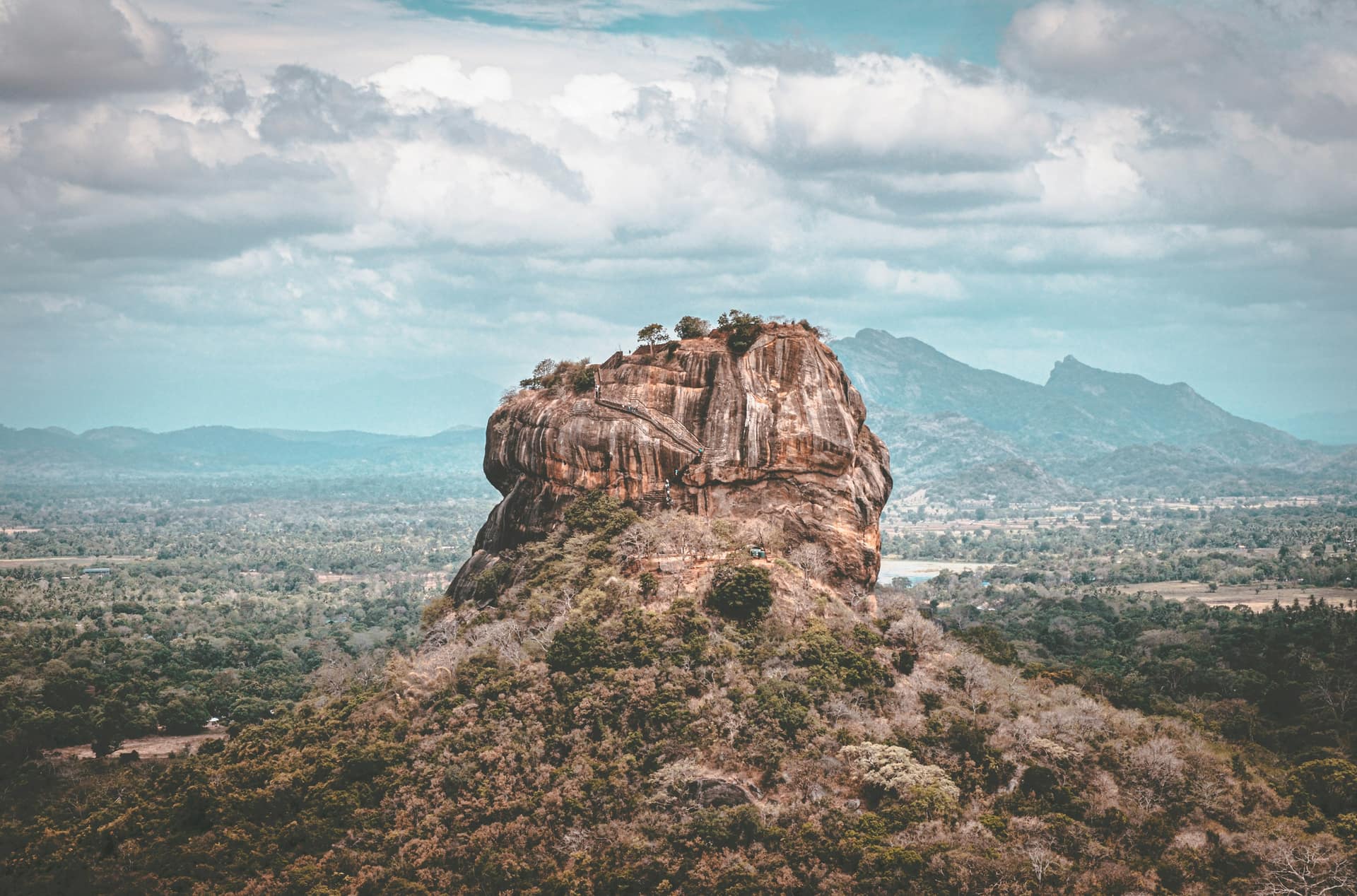
On the summit, there is plenty of space well away from the edges. You can sit in the middle of the rock and still see Sigiriya clearly.
Pacing and timing
Pacing and timing make the biggest difference to an older traveller's climb on Pidurangala. Start slowly, rest at each flatter spot and sip water often. Let faster climbers pass. Allow 45 to 60 minutes for the ascent, with a longer rest at the reclining Buddha.
Climbing in daylight is easier than climbing in the dark. You can see the steps clearly, judge the scramble before committing and avoid the sunrise queue. Sunset climbs work well, with a head torch for the last part of the descent, or a mid-morning climb on a cooler, cloudy day.
- →Allow 45 to 60 minutes for the climb.
- →Rest at the reclining Buddha before deciding on the scramble.
- →Prefer daylight or sunset over sunrise.
- →Avoid the midday heat from March to May.
Turning points
Turning points on Pidurangala are the key to enjoying it without strain. The reclining Buddha, roughly two thirds of the way up, is the obvious one: a large, atmospheric image under a rock overhang, with shade, a place to sit and glimpses of the plain through the trees.
Turning back here is common and sensible. You will have climbed through the forest, seen the temple and the Buddha, and avoided the only section with real exposure. Many travellers who stop here say the climb was worthwhile in its own right.
If you do continue, go up the scramble with a companion close behind, and decide at each step. There is no shame in turning back halfway through it.
- →Turning point 1: the temple at the base.
- →Turning point 2: a flatter rest spot on the forest steps.
- →Turning point 3: the reclining Buddha, below the scramble.
Help on the climb
Help on the Pidurangala climb is available if you arrange it. A local guide can walk with you, steady you on the steps and give a hand on the scramble. Agree the fee in advance through your hotel. A walking pole helps on the forest steps but gets in the way on the boulders.
Companions are the best help on the scramble: one ahead to show the footholds, one behind for reassurance. Going down, let a companion go first to guide your feet.
Anyone with heart conditions, recent joint surgery or balance problems should take medical advice before climbing. Travel insurance should cover hiking of this kind; check the policy wording.
Gentler views of Sigiriya
Gentler views of Sigiriya rock are easy to find if you prefer not to climb Pidurangala. The bund of the Sigiriya tank, south of the rock, gives a flat walk with a fine view and reflections at sunrise or sunset. Several hotels in the area have terraces or rooms that look straight at the rock.
The water gardens at the base of Sigiriya can be visited without climbing the rock itself. At Lankan Stays & Trails, we often build a gentle Sigiriya day for older guests around these, with a guided garden walk in the morning and the tank at sunset.
- →The Sigiriya tank bund: flat, easy, with reflections.
- →Hotel terraces facing the rock.
- →The water gardens at the base of Sigiriya.
Frequently asked questions
Is Pidurangala suitable for older travellers?
It suits many older travellers who walk regularly and have good balance. The path is short but uneven, with few handrails, and ends in a boulder scramble. Climb slowly in daylight, rest often and treat the reclining Buddha as a turning point if the scramble feels too much.
Is Pidurangala easier than Sigiriya?
It is shorter, but rougher. Sigiriya has more steps but most are built staircases with handrails. Pidurangala has uneven stone steps and a scramble with high steps and some exposure. People with knee or balance issues often find Sigiriya the easier of the two.
Can you climb Pidurangala with a fear of heights?
Many people with a mild fear of heights manage it, as the exposure is limited to the short final scramble and the summit edges. Those with a strong fear should stop at the reclining Buddha. The summit is broad, so you can stay well away from the edges if you go up.
Can I stop at the reclining Buddha and come back down?
Yes, and many people do. The reclining Buddha lies roughly two thirds of the way up, below the scramble. It is shaded, atmospheric and a good place to rest, with glimpses of the plain through the trees. You will miss the full summit view but avoid the exposure.
Is Pidurangala bad for knees?
The descent can be hard on knees, because the stone steps are uneven and often high. Go slowly, use a walking pole on the forest steps, and take the scramble backwards if needed. Allow extra time and avoid climbing it on the same morning as Sigiriya.
Should older travellers climb Pidurangala at sunrise?
Daylight or sunset climbs are usually easier, as you can see the steps and judge the scramble. Sunrise means climbing in the dark and often queuing at the scramble. If sunrise matters, start early, take a head torch and climb with a companion or a local guide.
Where else can I see Sigiriya rock without a hard climb?
The bund of the Sigiriya tank, south of the rock, gives a flat walk with a fine view and reflections. Several hotels nearby have terraces facing the rock. The water gardens at the base of Sigiriya also give close views without climbing the rock itself.