
Quick answer
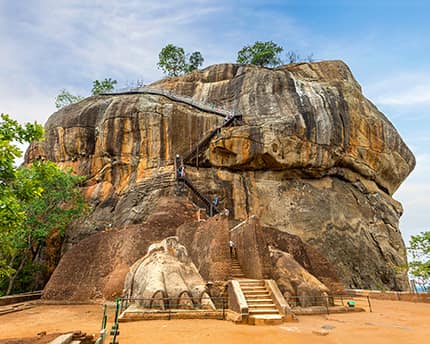
Sigiriya is not Ravana's palace. It was built in the fifth century CE by King Kashyapa as a fortified palace on a 200-metre rock, with frescoes, water gardens and a lion gateway. The Ravana link is a modern popular idea, spread online, with no basis in tradition or archaeology. Even so, Sigiriya gives film fans a real ancient palace to explore, and the comparison with the film's Lanka is fun.
Key takeaways
- Sigiriya was built by King Kashyapa in the fifth century CE.
- The Ravana palace idea is modern and online, not traditional.
- Sigiriya is a UNESCO World Heritage Site and a superb climb.
- Its frescoes, water gardens and lion's paws evoke royal splendour.
- Ramayana fans can pair it with real tradition sites in the hills.
The palace on screen
The film's Ravana sits at the heart of a golden city, his court built on huge sets and extended with visual effects. Reports describe lavish golden details meant to show his wealth and power.
The palace is not based on any Sri Lankan site, and none of the film was shot on the island, as far as published reports show. It is an imagined Lanka, drawn from Valmiki's descriptions of a city of gold.
Valmiki describes Ravana's palace in rich detail, with crystal floors, golden pillars and gardens. Hanuman marvels at it during his search, and that sense of wonder is what the film seeks to recreate.
Fans should enjoy the film's palace as art. Its designers drew on temple architecture, royal courts and pure imagination, and it was never meant to show a real place in Sri Lanka or anywhere else.
What Sigiriya really is
Sigiriya was built by King Kashyapa, who seized the throne from his father in the fifth century CE and moved his capital to the rock. He built a palace on the summit, gardens around the base and a gateway shaped like a lion, of which only the paws remain.
Halfway up, the famous frescoes of celestial women survive in a sheltered pocket of the rock. The mirror wall, once polished to a shine, carries ancient graffiti, poems written by visitors more than a thousand years ago.
After Kashyapa's fall, Sigiriya became a Buddhist monastery and was later abandoned. It is now a UNESCO World Heritage Site and Sri Lanka's most visited ancient monument.
- →Built: fifth century CE by King Kashyapa.
- →Features: frescoes, mirror wall, lion's paws, water gardens.
- →Status: UNESCO World Heritage Site.
Where the Ravana idea came from
In recent years, books, television programmes and social media in Sri Lanka and India have promoted the idea that Sigiriya was Ravana's palace. The theory points to the rock's grandeur and the legends of Ravana's flying chariot.
Historians and archaeologists reject the claim. Sigiriya's construction is well documented in the Culavamsa chronicle and confirmed by archaeology. Traditional Ramayana sites in Sri Lanka do not include it.
Guides at Sigiriya will tell Kashyapa's story. If you ask about Ravana, many will smile and explain the theory as a modern legend.
Visitors can enjoy the theory as part of modern Ravana culture without accepting it as history. Holding the two apart lets you appreciate both: the real achievement of Kashyapa's builders and the imaginative pull of Ravana in Sri Lankan life today.
- →Source of the idea: modern books, TV and social media.
- →Historians: firmly reject it.
- →Traditional Ramayana sites: do not include Sigiriya.
Climbing Sigiriya as a film fan
Even without Ravana, Sigiriya delivers the drama the film promises. The climb rises through gardens, past the frescoes and between the lion's paws to a summit of palace ruins with sweeping views.
Start early, ideally at opening time, to avoid heat and crowds. The climb takes about two hours return at a steady pace, with around 1,200 steps. SAARC nationals pay a lower entrance fee than other foreign visitors.
Lankan Stays & Trails can pair Sigiriya with the Ramayana sites in the hills, so families see both a real ancient palace and the places tradition links to the epic.
- →Start: at opening time.
- →Time: about two hours return.
- →Steps: around 1,200.
Pairing with real Ramayana sites
From Sigiriya, the Ramayana tradition sites are a few hours away. Laggala and Dunuvila, linked to the war, are about three hours. Sita Kotuwa and the hill country sites are reached via Kandy.
Ritigala, near Habarana, is linked by tradition to the Sanjeevani mountain and makes a fine half-day trip from Sigiriya, with forest monastery ruins.
Combining the Cultural Triangle with the hill country gives a trip that balances history and legend.
Families who loved the film often enjoy a simple game at Sigiriya: comparing what they see with the screen palace. The lion's paws, the frescoes and the summit cistern make good talking points, and children quickly learn the difference between a real king's palace and an imagined one.
Frequently asked questions
Is Sigiriya Ravana's palace?
No. Sigiriya was built in the fifth century CE by King Kashyapa. The Ravana palace idea is a modern popular theory spread online, rejected by historians and absent from traditional Ramayana sites in Sri Lanka.
Was the Ramayana movie filmed at Sigiriya?
No. As far as published reports show, the film was shot largely on sets in Mumbai, with its palace created on sets and with effects. Sigiriya is not a filming location.
Why do people link Sigiriya with Ravana?
Sigiriya's grandeur and the legends of Ravana's flying chariot led some modern writers and programmes to link the two. The idea spread on social media, but it has no basis in archaeology or old tradition.
Is Sigiriya worth visiting for Ramayana fans?
Yes. Sigiriya is a spectacular ancient palace that gives film fans a real sense of royal splendour. Treat it as Sri Lankan history, and pair it with traditional Ramayana sites in the hills for the legend.
How long does the Sigiriya climb take?
About two hours return at a steady pace, with around 1,200 steps. Start at opening time to avoid the heat and crowds, and bring water. The frescoes and lion's paws make good rest stops.
Can elderly parents climb Sigiriya?
Fit older visitors can manage with rests, but the steps are steep and exposed. Those with limited mobility can enjoy the water gardens and museum at the base, or view the rock from nearby Pidurangala's lower slopes.
Which Ramayana sites are near Sigiriya?
Ritigala, linked to the Sanjeevani mountain, is about 30 to 45 minutes away. Laggala and Dunuvila, linked to the war, are about three hours. The hill country sites are reached via Kandy.