
Quick answer
Sigiriya and Anuradhapura suit different travellers. Sigiriya is a compact, dramatic fifth-century citadel seen in a morning, with a climb of roughly 1,200 steps. Anuradhapura was Sri Lanka's capital from roughly the 4th century BCE to the early 11th century CE, a sprawling sacred city of huge stupas and the Sri Maha Bodhi tree, needing a full day. On a short first trip, most travellers prioritise Sigiriya. Anuradhapura rewards those interested in Buddhism and deeper history.
Key takeaways
- Sigiriya is a single fifth-century citadel seen in two to three hours; Anuradhapura is a sprawling city needing a full day.
- Anuradhapura was Sri Lanka's capital for roughly fourteen centuries, from around the 4th century BCE to the early 11th century CE.
- Anuradhapura is an active pilgrimage centre, home to the Sri Maha Bodhi, a tree grown from a cutting of the Bodhi tree.
- Sigiriya is roughly 2 to 2.5 hours by road from Anuradhapura.
- On a short first trip, Sigiriya usually takes priority; Anuradhapura suits a longer or more history-focused trip.
What each place is
Sigiriya is the rock citadel of King Kashyapa, built roughly 477 to 495 CE: water gardens, frescoes, a mirror wall, lion's paws and a palace on a roughly 200-metre granite monolith. It is compact, visually dramatic and seen in a morning.
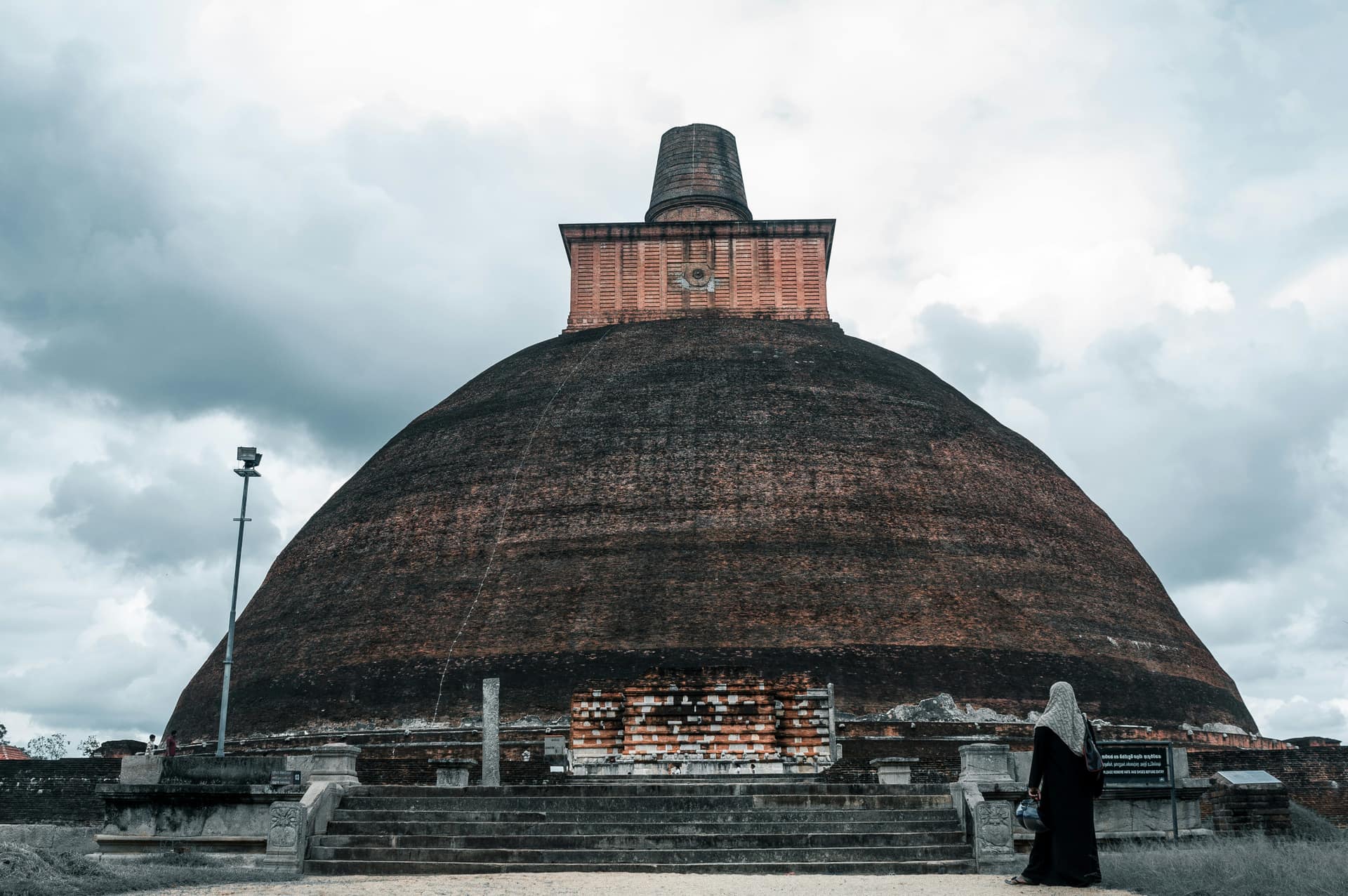
Anuradhapura was Sri Lanka's first great capital, from roughly the 4th century BCE until the early 11th century CE. It is a vast area of huge stupas, monasteries, tanks and palaces, including the Ruwanwelisaya, the Jetavanaramaya and the Sri Maha Bodhi, and it remains one of Buddhism's most sacred places.
Sigiriya and Anuradhapura compared
The two sites differ in scale, time needed, effort and atmosphere.
- →Time on site: Sigiriya two to three hours; Anuradhapura a full day.
- →Physical effort: Sigiriya a climb of roughly 1,200 steps; Anuradhapura flat but spread out.
- →Getting around: Sigiriya on foot; Anuradhapura by bicycle, tuk-tuk or vehicle.
- →Atmosphere: Sigiriya a monument; Anuradhapura a living pilgrimage site.
- →History: Sigiriya one short reign; Anuradhapura roughly fourteen centuries.
- →Dress: Sigiriya relaxed; Anuradhapura modest dress and white clothing welcomed at sacred sites.
Who should prioritise Sigiriya
Sigiriya suits most first-time visitors to Sri Lanka, especially on trips of a week or less. It is visually spectacular, compact, easy to fit into an itinerary and offers a clear, memorable story.
It also suits travellers who want a physical challenge, photographers and families, since children often find a rock with lion's paws more engaging than a field of stupas.
Who should prioritise Anuradhapura
Anuradhapura suits travellers interested in Buddhism, pilgrimage and the long sweep of Sri Lankan history. Watching pilgrims in white bring offerings to the Sri Maha Bodhi is one of the most moving experiences on the island.
It also suits those who cannot or prefer not to climb, since the site is flat, and second-time visitors who have already seen Sigiriya.
- →Travellers interested in Buddhism and pilgrimage.
- →Those who prefer not to climb.
- →Second-time visitors to Sri Lanka.
- →Travellers heading north to Mannar, Jaffna or Wilpattu.
How the day feels at each site
A morning at Sigiriya is a single, concentrated effort: gate at opening, roughly 1,200 steps, summit by around 8.30am and back down before the heat peaks. The rest of the day is free for rest, Dambulla or a safari.
A day at Anuradhapura is spread out and slower. The sacred sites are kilometres apart, so most visitors move between them by bicycle, tuk-tuk or vehicle, walking barefoot on hot stone at each shrine. Early morning and late afternoon, when pilgrims gather at the Sri Maha Bodhi, are the most atmospheric hours.
- →Sigiriya: one concentrated climb, finished by mid-morning.
- →Anuradhapura: a spread-out day between sacred sites.
- →Sigiriya: shoes on throughout.
- →Anuradhapura: shoes off at every shrine; bring socks for hot stone.
Seeing both
Sigiriya and Anuradhapura are roughly 2 to 2.5 hours apart by road. A day trip to Anuradhapura from Sigiriya is possible but long. A better plan is a night in Anuradhapura, either before arriving at Sigiriya from the north-west or after, on the way to Jaffna or Wilpattu.
Lankan Stays & Trails often routes longer Cultural Triangle trips through Anuradhapura, Sigiriya and Polonnaruwa in sequence, which tells Sri Lanka's ancient history in order: the first capital, the rock and the medieval city.
Frequently asked questions
Is Anuradhapura better than Sigiriya?
Neither is better; they are different. Sigiriya is a compact, dramatic citadel seen in a morning. Anuradhapura is a vast sacred capital needing a full day. First-time visitors usually prioritise Sigiriya, and history or Buddhism enthusiasts often prefer Anuradhapura.
How far is Anuradhapura from Sigiriya?
Roughly 75 to 80 kilometres, or 2 to 2.5 hours by road. A day trip is possible but long, and many travellers prefer a night in Anuradhapura. Leave early to reach the sacred sites while the stone is still cool underfoot.
Is Anuradhapura worth visiting after Sigiriya?
Yes, if you have time and an interest in history or Buddhism. Anuradhapura's stupas, monasteries and the Sri Maha Bodhi show a completely different side of ancient Sri Lanka from Sigiriya's royal citadel.
How long do you need in Anuradhapura?
A full day covers the main sites, including the Sri Maha Bodhi, the Ruwanwelisaya, the Jetavanaramaya and the Abhayagiri area. A night there lets you see the sacred sites in the early morning and evening, when pilgrims are most active.
Which is older, Sigiriya or Anuradhapura?
Anuradhapura is older as a city, founded as a capital around the 4th century BCE. Sigiriya was used by monks from roughly the 3rd century BCE, but its royal citadel dates from Kashyapa's reign in the late fifth century CE.
Can I skip Anuradhapura on a first trip?
Many travellers do, especially on trips of a week or less. Sigiriya, Dambulla and Polonnaruwa give a strong picture of ancient Sri Lanka. Anuradhapura adds depth for longer or history-focused trips.
What should I wear in Anuradhapura?
Modest clothing covering shoulders and knees, and shoes you can remove easily, since you will walk barefoot at sacred sites. White clothing is traditional for pilgrims and appreciated. Bring socks, as stone can be very hot at midday.