
Quick answer
Sri Lankan kovils follow Tamil Shaiva Agamic traditions close to those of Tamil Nadu, with Sanskrit and Tamil chanting, daily pujas, gopurams and festival chariots. Shiva, Murugan, Ganesha and Amman are the most worshipped deities; Rama and Sita temples are few, centred on Sita Eliya and Ramboda. Darshan is usually calm, without paid queues. Men often remove shirts inside, and festivals follow the Tamil calendar. Indian visitors are warmly welcomed.
Key takeaways
- Sri Lankan kovils follow Tamil Shaiva Agamic rites, close to Tamil Nadu traditions.
- Shiva, Murugan, Ganesha and Amman dominate; Rama and Sita temples are rare.
- Darshan is usually calm and free, without the paid queues of large Indian temples.
- Festivals follow the Tamil calendar, with chariot processions and kavadi.
- Sri Lankan Hindus generally welcome Indian pilgrims warmly.
A Tamil Shaiva tradition
Hinduism in Sri Lanka is largely the Tamil Shaiva tradition, shaped over many centuries by the island's Tamil communities in Jaffna, the east, the hill country and Colombo. Temple worship follows the Agamas, with daily pujas, abhishekam and festivals much like those of Tamil Nadu's great temples.
Priests are usually from Brahmin families trained in the Agamic tradition, and they chant in Sanskrit and Tamil. The Tevaram and Thiruvasagam hymns of the Shaiva saints are sung in many temples. Visitors from Tamil Nadu will recognise much, while those from North India may find the style closer to southern temples than to their own.
Hill Country Tamils, whose ancestors came from South India to work on tea estates in the nineteenth century, also have their own temples, often to Amman and Murugan. The Seetha Amman Temple at Sita Eliya is cared for by this community, and many of its devotees are estate families.
- →Tamil Shaiva Agamic worship.
- →Sanskrit and Tamil chanting, Tevaram hymns.
- →Hill Country Tamil communities care for many hill temples.
Which deities you will meet
Shiva is worshipped in the great ancient temples, including the five Pancha Ishwarams: Munneswaram, Koneswaram, Thiruketheeswaram, Naguleswaram and the lost Tondeswaram. Murugan, called Kandaswamy or Skanda, is especially beloved, with Nallur in Jaffna and Kataragama in the south among the island's most famous temples.
Ganesha, called Pillaiyar, has shrines everywhere, from roadside stones to grand temples. The Goddess is worshipped as Amman in many forms, including Kali at Munneswaram and Nagapooshani Amman at Nainativu. Vishnu temples exist but are fewer than in India.
Temples dedicated mainly to Rama and Sita are rare. The Seetha Amman Temple and the Sri Bhakta Hanuman Temple are the main ones on the trail, with Rama Parivar also present in some other temples. Indian pilgrims sometimes expect more Rama temples and are surprised to find Lanka's Hinduism centred on Shiva and Murugan.
- →Shiva: the Pancha Ishwarams.
- →Murugan: Nallur, Kataragama.
- →Rama and Sita: Seetha Amman, Ramboda and a few others.
Darshan, queues and atmosphere
Most Sri Lankan kovils have no paid special darshan, VIP tickets or long queue complexes. Even at major temples like Munneswaram and Koneswaram, darshan is usually calm and close outside festival days. Indian pilgrims used to waiting hours at large temples often find this a joy.
The atmosphere is usually unhurried and community-centred. Local families come for weekly worship, and visitors may be invited to stay for prasad or to watch a ritual. Priests are generally willing to explain customs to Indian visitors who show interest.
On festival days, crowds can be very large, especially at Nallur, Kataragama and Munneswaram. Even then, organisation tends to be informal, with devotees moving together through the temple in procession rather than in managed queues.
Customs that differ slightly
Men removing shirts before entering inner shrines is more common in Sri Lanka than in many North Indian temples, and is expected at most Shiva temples. Women usually wear sarees or salwar kameez. Many Sri Lankan Tamil women wear fresh flowers in their hair for temple visits.
Vibhuti is applied in three horizontal lines by many Shaiva devotees, and priests often place it directly on the forehead. Kumkum and sandal paste are also given. The camphor flame is offered to devotees, who pass their hands over it and touch their eyes, as in South India.
Coconut breaking, kavadi, fire-walking and body piercing during festivals are part of Tamil devotional practice, especially at Murugan temples such as Kataragama. Visitors may find these intense, and photography should be respectful and discreet.
- →Men often shirtless in inner shrines.
- →Vibhuti in three horizontal lines.
- →Kavadi and fire-walking at some festivals.
The festival calendar
Sri Lankan Hindus follow the Tamil calendar. Major festivals include Thai Pongal in January, Maha Shivaratri in February or March, the Tamil New Year in April, the festivals of Nallur and Kataragama in July and August, Munneswaram's festival around August and September, Navaratri in September or October and Deepavali in October or November.
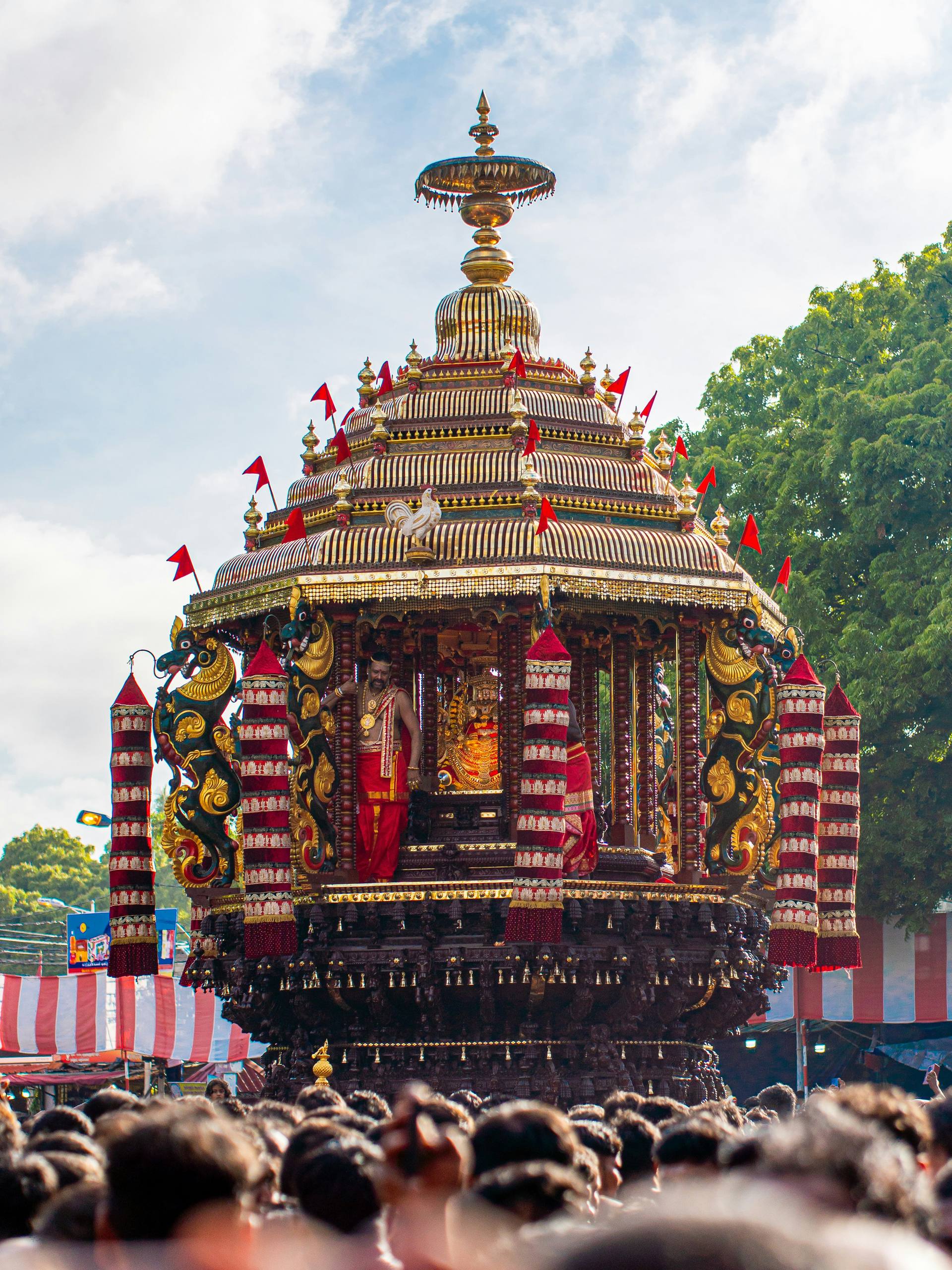
Temple festivals, called mahotsavam, often run for 10 to 25 days, with daily processions and a chariot festival near the end. Ram Navami and Janmashtami are celebrated but are quieter than in North India, reflecting the island's Shaiva emphasis.
Deepavali and Thai Pongal are public holidays in Sri Lanka, as is Maha Shivaratri. Hotels and roads in Tamil areas may be busier, and temples hold special pujas that visitors are welcome to join.
How Indian pilgrims are received
Indian pilgrims are generally received warmly at Sri Lankan kovils. Many Sri Lankan Tamils have family or cultural ties with Tamil Nadu, and the shared language and traditions create an immediate bond. Priests and devotees often ask where visitors come from and which temples they know in India.
Hindi is not widely spoken, but English and Tamil are common in temples. Visitors who speak Tamil find conversation easy; others can rely on gestures, smiles and a guide. A few words of Tamil, such as vanakkam, are always appreciated.
Lankan Stays & Trails guides help Indian families understand the Tamil Shaiva traditions of each temple and explain any differences from home. Tell us which traditions your family follows, and we will suggest temples and festivals that suit you.
Frequently asked questions
Are Sri Lankan Hindu temples different from Indian temples?
They are very similar to Tamil Nadu temples, following Tamil Shaiva Agamic rites with Sanskrit and Tamil chanting. Differences include fewer Rama temples, more emphasis on Shiva and Murugan, and usually calm darshan without paid queues. North Indian visitors notice more differences than South Indians.
Are there many Rama temples in Sri Lanka?
No. Sri Lankan Hinduism centres on Shiva, Murugan, Ganesha and Amman. The main Ramayana temples on the trail are the Seetha Amman Temple at Sita Eliya and the Sri Bhakta Hanuman Temple at Ramboda, with Rama Parivar in some other temples.
Is there paid darshan at Sri Lankan temples?
Most kovils have no paid special darshan or VIP queues. Darshan is usually calm and free. Some temples have printed rates for archana or abhishekam, and donations are welcome. Festival days bring large crowds and informal processions.
Do Sri Lankan priests speak Hindi?
Generally not. Priests chant in Sanskrit and Tamil and many speak English. Visitors who speak Tamil find conversation easy, and a guide can help others. A simple vanakkam is always appreciated by priests and devotees.
What festivals do Sri Lankan Hindus celebrate?
Major festivals include Thai Pongal, Maha Shivaratri, Tamil New Year, the Nallur and Kataragama festivals, Munneswaram's festival, Navaratri and Deepavali. Temple mahotsavams run for 10 to 25 days with processions and chariot festivals near the end.
Do men have to remove shirts at Sri Lankan kovils?
Usually yes at Shiva temples and often at other kovils, before entering the inner shrine. This is more common than in many North Indian temples. Wearing a veshti or dhoti with an angavastram makes it easy.
Are Indian pilgrims welcome at Sri Lankan kovils?
Yes. Indian pilgrims are generally received very warmly, and many Sri Lankan Tamils have cultural ties with Tamil Nadu. Priests often ask visitors about their home temples. Respectful dress and behaviour are all that is expected.