
Quick answer
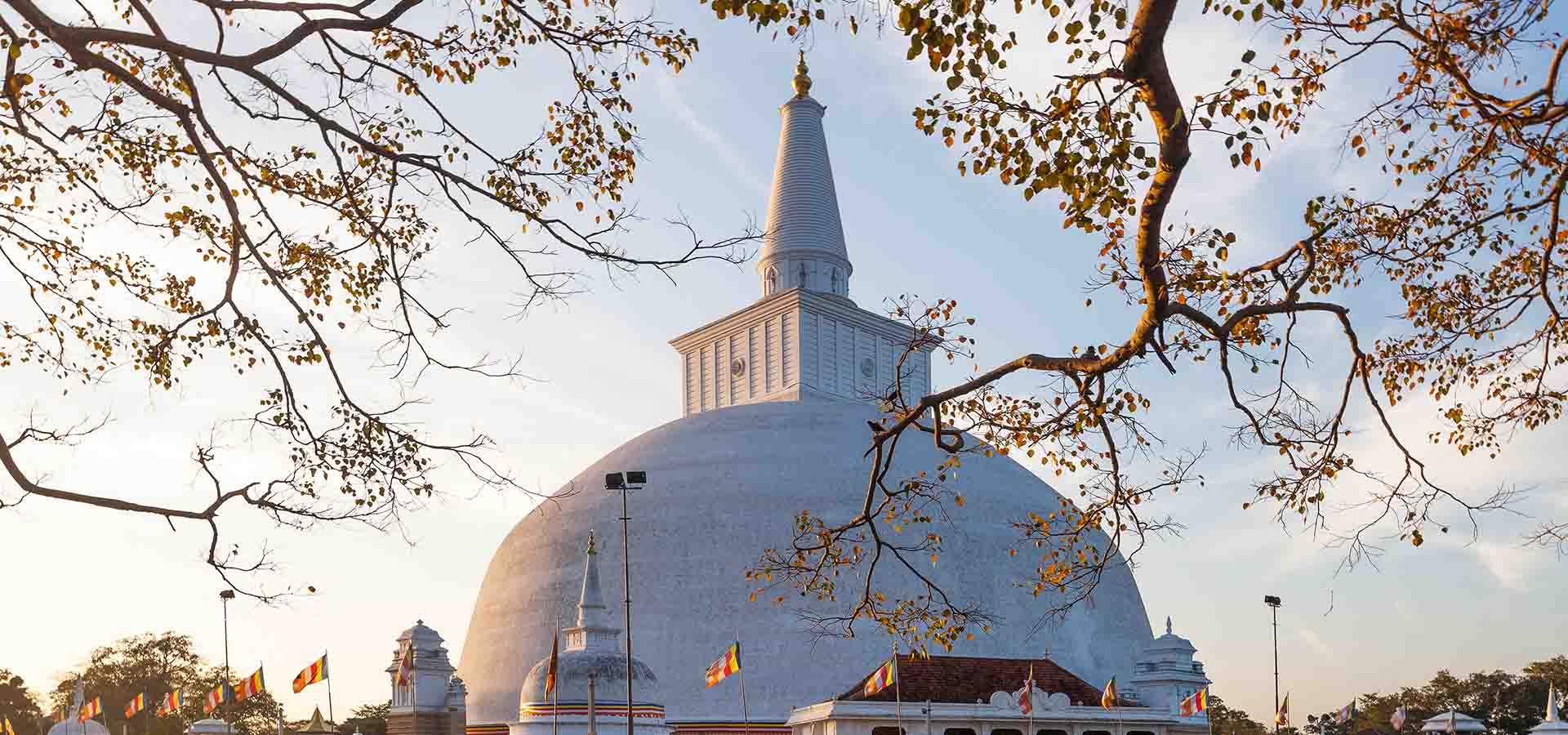
Non-Buddhists are welcome at every sacred site in the Cultural Triangle, including the Sri Maha Bodhi, Ruwanwelisaya, Dambulla's cave temple and the shrines of Polonnaruwa. You are expected to dress modestly, remove shoes and hats, walk clockwise around stupas and never turn your back on a Buddha image for a photo. You do not need to bow, pray or make offerings, though offering flowers is welcomed if you wish. Quiet, respectful observation is entirely appropriate.
Key takeaways
- Visitors of any faith or none are welcome at Cultural Triangle temples and stupas.
- Respect is expected rather than participation: modest dress, shoes and hats off and quiet behaviour.
- Offering flowers at a shrine is open to non-Buddhists and seen as a kind gesture, but never required.
- Many Cultural Triangle temples also contain devales, shrines to Hindu and local deities, reflecting Sri Lanka's mixed religious life.
- Pilgrims at the Sri Maha Bodhi and Ruwanwelisaya are generally pleased to see visitors taking an interest, and will often explain rituals.
You are welcome
Every sacred site in the Cultural Triangle welcomes visitors of other faiths and none. Sri Lankan Buddhism has long been open to outsiders, and the great monuments of Anuradhapura and Polonnaruwa have drawn travellers for centuries, from Chinese monks such as Faxian in the 5th century to visitors today.
Sri Lanka itself is religiously mixed, with Hindu, Muslim and Christian communities alongside the Buddhist majority. Many temples include devales for Hindu deities such as Vishnu and Kataragama, and people of different faiths often visit each other's shrines.
What matters is respect. No one will ask about your beliefs, and quiet, attentive visitors are always appreciated.
- →All faiths welcome at every major site.
- →Respect is expected, not belief.
- →Hindu shrines often sit within Buddhist temples.
What is expected
The expectations at Cultural Triangle sacred sites are the same for everyone. Cover your shoulders and knees, remove shoes and hats where pilgrims do, keep voices low and walk clockwise around stupas and Bo trees. Never touch or climb a Buddha image or stupa, and never pose with your back to a Buddha.
Pointing your feet towards a Buddha image or a monk is considered rude, so sit with feet tucked to one side. Public displays of affection are out of place. Clothing or tattoos showing the Buddha can cause offence and should be covered.
Behaviour on the way in and out matters too. Leave shoes where others leave them, turn off phone ringtones, and do not eat or smoke within a temple's grounds. If you need to leave a stupa terrace mid-walk, step aside to the outer edge rather than cutting across the line of pilgrims. These small courtesies are noticed and appreciated at Cultural Triangle sites.
- →Modest clothing covering shoulders and knees.
- →Shoes and hats off at shrines.
- →Walk clockwise around stupas and Bo trees.
- →Keep feet tucked away from images and monks.
Taking part, or not
Non-Buddhists in the Cultural Triangle can take part in as much or as little as they like. Offering flowers at a shrine is welcomed from anyone, and many visitors find it a meaningful gesture of respect. Lighting an oil lamp or joining the walk around Ruwanwelisaya is also fine.
You do not need to bow, kneel or recite anything. Standing quietly, palms together if you wish, is perfectly appropriate. Some Christian and Muslim visitors prefer to observe without offering, and that is entirely respected.
If you are unsure, watch pilgrims and follow their lead, or ask a guide. Lankan Stays & Trails guides explain each ritual before you reach a shrine, so you can decide in advance what feels right.
Site-by-site notes
Each Cultural Triangle sacred site has its own feel. The Sri Maha Bodhi in Anuradhapura is the most intensely devotional, especially in the evening, and visitors should keep to the edges. Ruwanwelisaya is welcoming, with a wide terrace for walking. Dambulla's caves are crowded with pilgrims and visitors together.
Polonnaruwa's shrines are mostly ruins but still sacred, and Gal Vihara draws pilgrims who pray before the statues. Mihintale is a pilgrimage mountain with steps, best visited early.
- →Sri Maha Bodhi: the most devotional; stay quiet and to the side.
- →Ruwanwelisaya: open terrace, easy to join the walk.
- →Dambulla: busy; follow the flow.
- →Gal Vihara: pilgrims pray here; avoid blocking their view.
Questions and conversations
Pilgrims and monks in the Cultural Triangle are often happy to explain what they are doing. A simple question, asked politely, can lead to a warm conversation about the Bo tree, the precepts or poya. Avoid debating religion, but curiosity is welcomed.
If a monk speaks to you, stand or sit at a lower level, and women should avoid touching monks or handing items directly. Ayubowan, with palms together, is a respectful greeting.
- →Ask politely about rituals.
- →Avoid religious debate.
- →Greet with ayubowan and palms together.
Frequently asked questions
Can non-Buddhists visit Buddhist temples in Sri Lanka?
Yes. Visitors of any faith or none are welcome at every temple and sacred site in the Cultural Triangle, including the Sri Maha Bodhi, Dambulla and the stupas of Anuradhapura. Dress modestly, remove shoes and hats, and behave quietly.
Do I have to bow at a Buddhist temple?
No. Bowing or kneeling is not expected of non-Buddhist visitors. Standing quietly, with palms together if you wish, is perfectly respectful. Watch pilgrims and follow their lead if you want to take part more.
Can I make an offering if I'm not Buddhist?
Yes. Offering flowers is open to anyone and is seen as a kind gesture of respect. Buy flowers from stalls outside the temple and place them on the flower altar. It is entirely optional.
Is it disrespectful to visit as a tourist?
Not if you behave respectfully. Modest dress, removed shoes and hats, quiet voices and no posing with your back to a Buddha are what matter. Many pilgrims are pleased to see visitors taking an interest in their sacred sites.
Can Muslims and Christians visit Buddhist sites in Sri Lanka?
Yes. Sri Lanka is religiously mixed, and people of all faiths visit Buddhist sites. You can observe without taking part in any ritual, and that is fully respected. Guides can explain what is happening without expecting participation.
What should I avoid at Buddhist sites?
Avoid revealing clothing, wearing shoes or hats at shrines, touching or climbing statues, posing with your back to a Buddha, pointing feet at images or monks, loud voices and public affection. Cover any Buddha tattoos.