
Quick answer
The best places to visit in Sri Lanka's North Central Province are Anuradhapura, with the sacred Bo tree and great stupas; Mihintale, where Buddhism arrived; Polonnaruwa and the Gal Vihara; Minneriya and Kaudulla for elephants; the forest monastery of Ritigala; the standing Buddha at Avukana; and the round relic house at Medirigiriya. Sigiriya and Dambulla, often grouped with them, are in fact in the Central Province.
Key takeaways
- The province has two districts, Anuradhapura and Polonnaruwa, matching the two ancient capitals.
- Sigiriya and Dambulla belong to the Central Province, though they share the same trip.
- Early mornings matter: midday heat on the ruins is fierce for most of the year.
- Minneriya's elephant gathering peaks roughly July to October.
- Habarana sits in Anuradhapura district and is a central base for the whole province.
Rajarata, the land of kings
Sri Lanka's North Central Province covers the heart of the old Rajarata kingdom. From roughly the third century BC to the eleventh century AD, Anuradhapura ruled most of the island, and then Polonnaruwa took over until the thirteenth century. Their ruins, monasteries and vast irrigation tanks shape the landscape today.
The province is part of what travellers call the Cultural Triangle, but not all of it. Sigiriya and Dambulla lie just across the line in Matale district, which belongs to the Central Province. In practice the region is visited as one, from bases such as Habarana, Sigiriya or Anuradhapura.
The plains are dry and hot for most of the year, with main rains roughly October to January. Visit the ruins at opening and in late afternoon, and spend the middle of the day by a pool or reservoir.
- →Anuradhapura district: Anuradhapura, Mihintale, Avukana, Ritigala, Habarana.
- →Polonnaruwa district: Polonnaruwa, Minneriya, Medirigiriya, Kaudulla.
- →Best light: from opening until roughly 10am, and after 4pm.
Anuradhapura and Mihintale
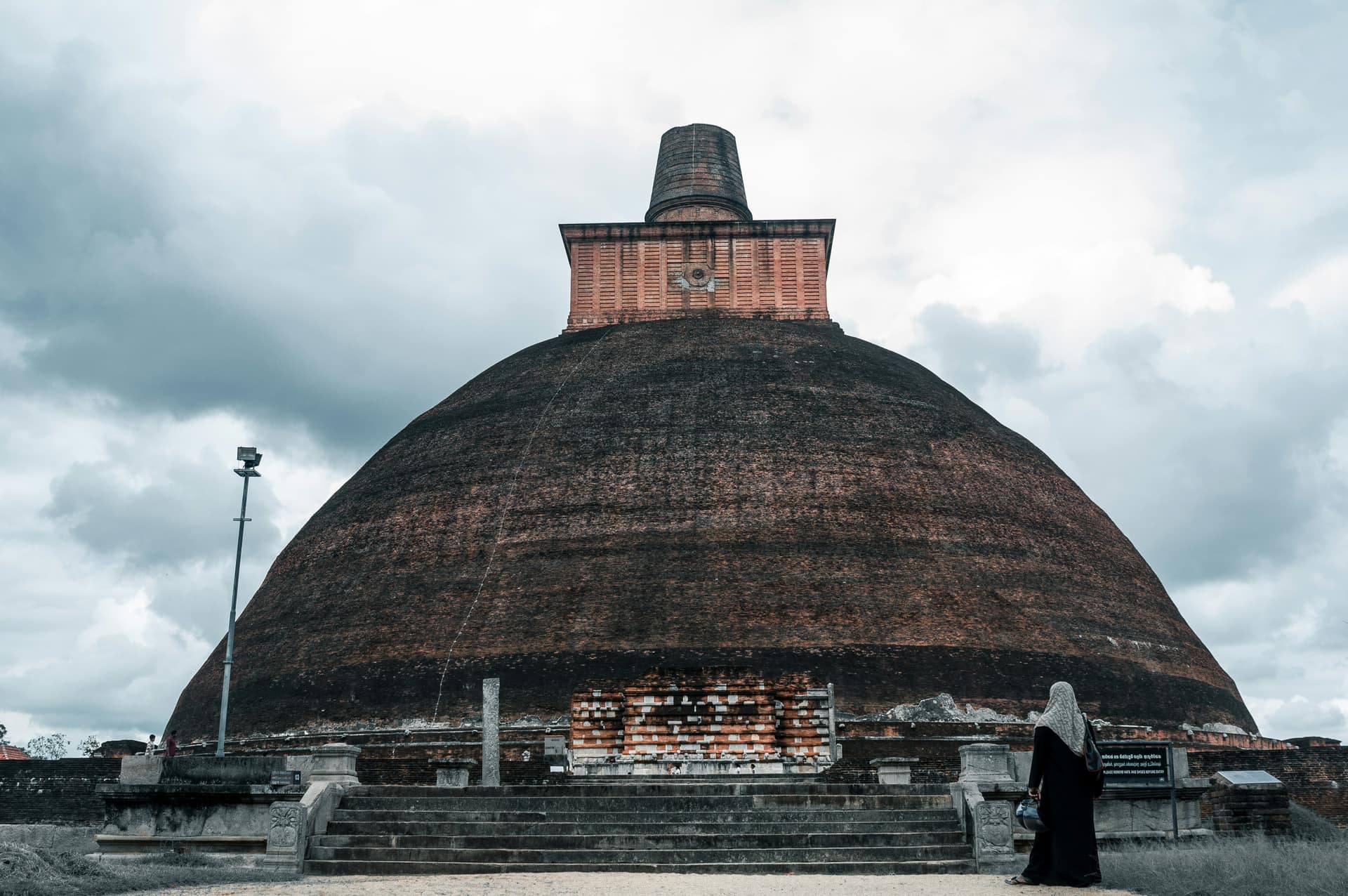
Anuradhapura's sacred city is still a living pilgrimage site. The Jaya Sri Maha Bodhi, grown from a cutting of the tree under which the Buddha gained enlightenment, draws white-clad pilgrims daily. The white dome of Ruwanwelisaya, the brick mountain of Jetavanaramaya and the forest ruins of Abhayagiri spread over a huge area, best covered by bicycle or tuk-tuk.
Isurumuniya's rock temple, with its carved lovers, and the Twin Ponds are quieter highlights. Allow a full day, start early and remember shoes come off at every sacred site, which makes hot stones a real issue by midday.
Mihintale, roughly 20 minutes east, is where Buddhism is said to have been introduced to the island. A long stone stairway climbs to stupas and a rock summit with views across the plains. It is especially busy at the Poson full moon in June.
- →Jaya Sri Maha Bodhi and Ruwanwelisaya.
- →Jetavanaramaya and Abhayagiri.
- →Mihintale at sunrise or late afternoon.
Polonnaruwa and the elephant parks
Polonnaruwa's medieval city is compact enough to cycle in a morning. The royal palace, the Quadrangle with its round Vatadage and the four great Buddhas of the Gal Vihara, carved from one granite face, are the highlights. Parakrama Samudra, the huge reservoir beside the city, is lovely at sunset.
Minneriya and Kaudulla national parks sit between Polonnaruwa and Habarana. From roughly July to October, hundreds of elephants gather on the shrinking reservoir shores to graze, a sight known as the Gathering. Outside those months, Eco Park or Hurulu may be better, so let your guide choose on the day.
Medirigiriya, roughly an hour north of Polonnaruwa, has an elegant circular relic house on a rock platform, often with nobody else there.
- →Gal Vihara and the Quadrangle.
- →Minneriya or Kaudulla, depending on where the herds are.
- →Medirigiriya for a quiet extra.
Ritigala, Avukana and the quiet sites
Ritigala is a forest monastery on a mountain slope, with stone paths, meditation platforms and ruined buildings under tall trees. It is cool, atmospheric and little visited, and makes a fine half-day from Habarana.
The Avukana Buddha, a standing figure roughly 12 metres tall carved from rock, overlooks the great Kala Wewa reservoir. Arrive early to see the morning light on its face. Other quiet sites include Sasseruwa's unfinished Buddha and the Thanthirimale rock temple near Anuradhapura.
Together these places give the province's history a sense of space that the busy main sites cannot.
- →Ritigala: forest and silence.
- →Avukana: the standing Buddha at sunrise.
- →Thanthirimale and Sasseruwa: for keen history travellers.
Planning a visit to the province
Most travellers spend three to four nights in the wider Cultural Triangle, which covers the North Central Province plus Sigiriya and Dambulla. Habarana is the most central base. Anuradhapura is worth a night of its own if you want sunrise at the stupas.
Tickets for Anuradhapura and Polonnaruwa are bought at site ticket offices or museum counters, and dress codes apply: shoulders and knees covered, hats off and shoes off at sacred areas. Carry socks for hot stone.
Lankan Stays & Trails can arrange early starts, a bicycle guide in Anuradhapura and a safari in the park where elephants are gathering that week.
Frequently asked questions
Is Sigiriya in the North Central Province?
Sigiriya is not in the North Central Province. It lies in Matale district, which belongs to the Central Province. It is, however, part of the Cultural Triangle and is usually visited on the same trip as Anuradhapura and Polonnaruwa, from bases such as Habarana or Sigiriya village.
Anuradhapura or Polonnaruwa: which should I visit?
If you can only visit one, Polonnaruwa is easier: it is compact, better preserved and close to Sigiriya and Minneriya. Anuradhapura is older, larger and more spiritual, with living pilgrimage sites. Travellers interested in history and Buddhism often find Anuradhapura the more moving of the two.
How many days do I need in the North Central Province?
Two days covers the essentials of the North Central Province: one for Anuradhapura and Mihintale and one for Polonnaruwa and Minneriya. Three or four days, including Sigiriya and Dambulla next door, lets you add Ritigala or Avukana and avoid the hottest hours.
When is the elephant gathering at Minneriya?
The elephant gathering at Minneriya usually peaks roughly July to October, when the dry season shrinks the reservoir and exposes fresh grass. Numbers vary each year with rainfall. Guides often switch to Kaudulla or Hurulu if the herds have moved, so stay flexible.
What should I wear at Anuradhapura?
At Anuradhapura wear clothes covering shoulders and knees, preferably light colours, and be ready to remove shoes and hats at sacred sites. The stone gets very hot, so socks help. Avoid clothing with images of the Buddha, and do not pose with your back to statues.
Is Mihintale worth visiting?
Mihintale is worth visiting for its history, as the place where Buddhism was introduced to Sri Lanka, and for the views from its rock summit. The climb is a long stone stairway, so go early or late in the day. It combines easily with Anuradhapura.