
Quick answer
The Ramayana trail combines well with Sri Lanka's Buddhist heritage over 10 to 12 days. Add the Temple of the Tooth in Kandy, the sacred city of Anuradhapura, Dambulla's cave temples and Sigiriya to the core Ramayana sites at Chilaw, Ramboda, Nuwara Eliya and Ella. Shared sites such as Kelaniya, Divurumpola and Mahiyangana link the two traditions. Trincomalee's Koneswaram fits naturally from the Cultural Triangle.
Key takeaways
- Ten to twelve days combines the core Ramayana sites with the Cultural Triangle.
- Kandy's Temple of the Tooth lies directly on the Ramayana route.
- Anuradhapura, Dambulla and Sigiriya form a natural loop.
- Kelaniya, Divurumpola and Mahiyangana link both traditions.
- Trincomalee and Koneswaram are 2 to 2.5 hours from Sigiriya.
Why combine the two
For many Indian Hindus, the Buddha is revered as an avatar of Vishnu, and Buddhist sites hold meaning alongside Hindu ones. Families who have visited Bodh Gaya, Sarnath or Kushinagar often wish to see Sri Lanka's great Buddhist monuments, which preserve traditions brought from India over two thousand years ago.
Sri Lanka's Buddhist heritage is among the richest in Asia: the Temple of the Tooth, the sacred Bodhi tree at Anuradhapura grown from a cutting of the Bodh Gaya tree, Dambulla's painted caves and Sigiriya's rock fortress. Many lie close to the Ramayana route.
Combining the two journeys also gives a fuller picture of Sri Lanka, showing how its faiths have shared sacred ground and stories for centuries.
- →The Buddha revered by many Hindus.
- →Sri Maha Bodhi from a Bodh Gaya cutting.
- →A fuller picture of Sri Lanka's sacred life.
Kandy and the Temple of the Tooth
Kandy lies directly on the Ramayana route between Chilaw and Nuwara Eliya. The Temple of the Tooth holds Sri Lanka's most sacred Buddhist relic, and its evening puja, with drums and offerings, is a moving experience. The temple complex also includes devales to Hindu-origin deities.
The four devales of Kandy honour Vishnu, Kataragama, Natha and Pattini, showing how Hindu deities are woven into Sri Lankan Buddhism. A night in Kandy fits naturally into any Ramayana trail.
Kandy's Esala Perahera, usually in July or August, is one of Asia's great festivals, with elephants, dancers and drummers. Dates change each year, and hotels fill months ahead.
Anuradhapura, Dambulla and Sigiriya
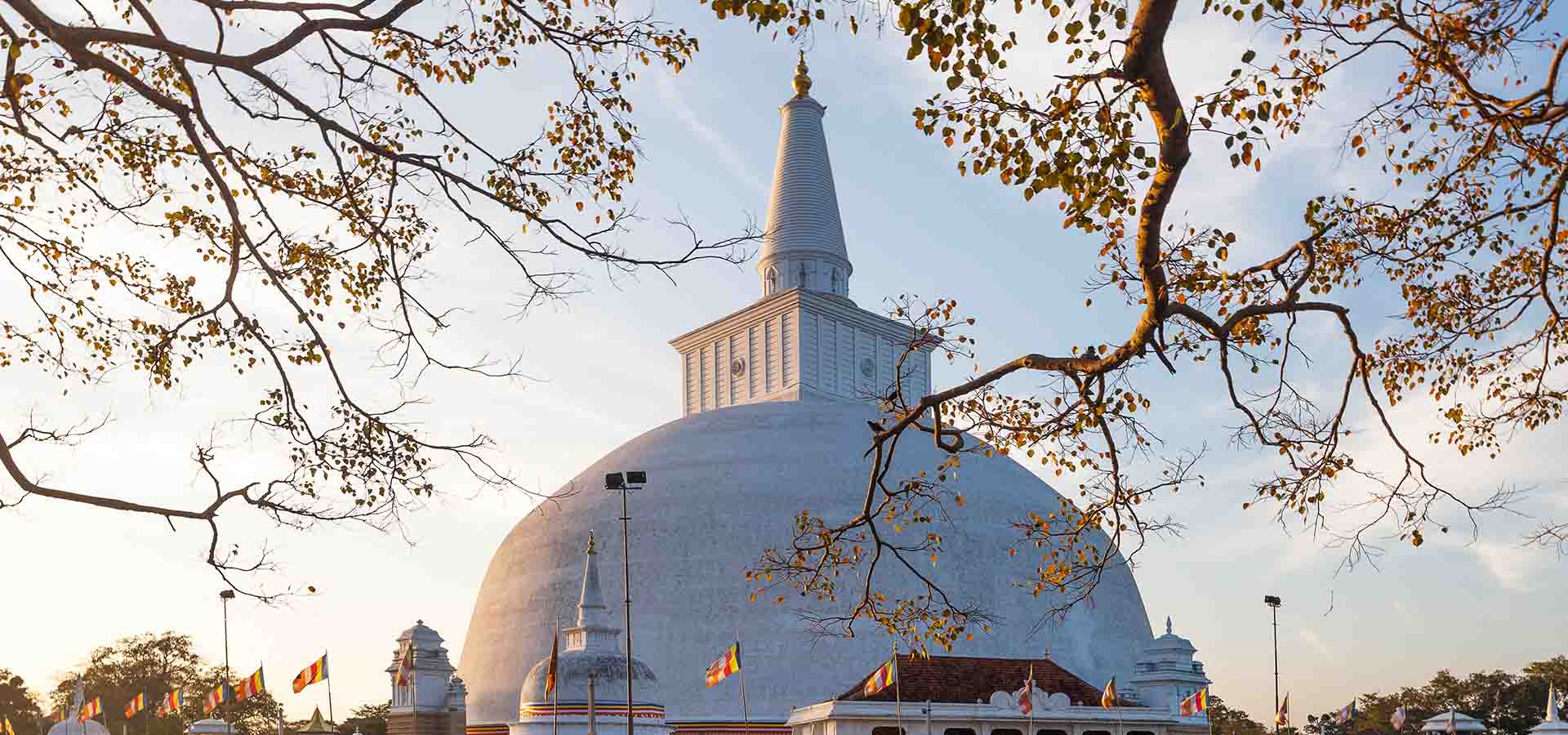
Anuradhapura, the ancient capital, holds the Sri Maha Bodhi, said to be grown from a cutting of the Bodh Gaya tree brought by Sanghamitta, daughter of Emperor Ashoka. Great stupas, monasteries and ponds spread across the sacred city. Allow a full day.
Dambulla's cave temples, roughly 1.5 hours from Kandy, hold painted ceilings and Buddha images, with Hindu deities among them. Sigiriya, nearby, is a fifth-century rock fortress built by King Kashyapa, not Ravana's palace as some claim, but a wonder of ancient engineering.
These sites form a loop of two to three days from Kandy. Families with elders can visit Sigiriya's water gardens and lower terraces without the full climb.
- →Anuradhapura: Sri Maha Bodhi and stupas.
- →Dambulla: painted cave temples.
- →Sigiriya: fifth-century rock fortress.
A ten to twelve day route
Days one to two: Munneswaram and Manavari, then Anuradhapura. Days three to four: Dambulla and Sigiriya, with an optional extension to Trincomalee for Koneswaram. Day five: Kandy and the Temple of the Tooth.
Days six to seven: Ramboda's Hanuman temple and Nuwara Eliya, with Seetha Amman, Hakgala and Divurumpola. Days eight to nine: Ella for Ravana Falls and Ravana Cave. Days ten to twelve: Kataragama, a beach and return to Colombo via Kelaniya.
This route covers the core Ramayana sites and the great Buddhist monuments without excessive driving.
Planning a combined journey
Allow ten to twelve days to combine both journeys comfortably. Brief family members on the differences between kovil and Buddhist temple etiquette, especially white clothing and shirts for men.
The best time is roughly January to April, when the Cultural Triangle and hill country are dry. Poya days bring crowds to Buddhist sites, and Vesak in May is beautiful but busy.
Lankan Stays & Trails plans combined Ramayana and Buddhist heritage routes with guides who explain both traditions respectfully. Tell us your interests, and we will balance the two journeys.
Frequently asked questions
Can we combine the Ramayana trail with Buddhist sites?
Yes. Ten to twelve days combines the core Ramayana sites with Kandy's Temple of the Tooth, Anuradhapura, Dambulla and Sigiriya. Shared sites such as Kelaniya and Divurumpola link the two traditions naturally.
Is the Temple of the Tooth on the Ramayana route?
Yes. Kandy lies directly on the route between Chilaw and Nuwara Eliya, so a night there allows a visit to the Temple of the Tooth and its evening puja without any detour.
Which Buddhist sites are linked to the Ramayana?
Kelaniya holds a Vibhishana devale, Divurumpola is where Sita's agni pariksha is remembered, and the Ravana Ella temple stands near Ravana Falls. Mahiyangana's stupa lies near Sita Kotuwa and Weragantota.
How many days for a combined pilgrimage?
Ten to twelve days allows the core Ramayana sites and the Cultural Triangle without excessive driving. Fourteen days adds Trincomalee's Koneswaram or a longer beach stay, and gives elders more rest between long drives.
Is Sigiriya Ravana's palace?
Historians and archaeologists date Sigiriya to King Kashyapa in the fifth century CE. The Ravana theory is a modern popular idea. Sigiriya is still a wonderful addition to a combined route.
What is the Sri Maha Bodhi?
The Sri Maha Bodhi in Anuradhapura is a sacred fig tree said to be grown from a cutting of the Bodh Gaya tree under which the Buddha attained enlightenment, brought by Sanghamitta, daughter of Emperor Ashoka.
When is the best time for a combined route?
Roughly January to April is driest for the Cultural Triangle and hill country. Kandy's Esala Perahera in July or August and Vesak in May are spectacular but crowded, so book hotels well ahead for those dates.