
Quick answer
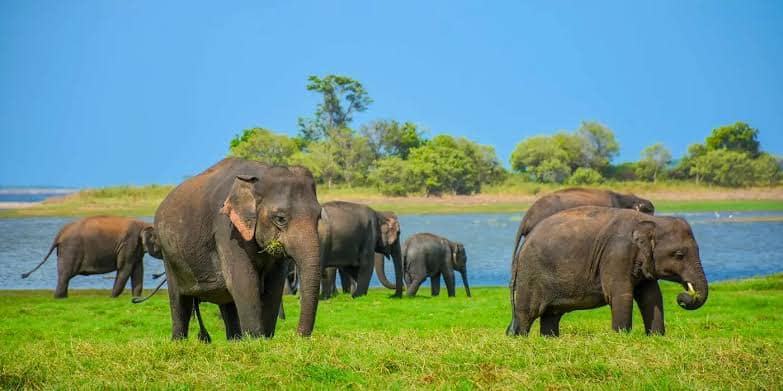
The wildlife calendar for the culture, wildlife and beach route has two halves. From roughly December to April, use the standard route: whales off Mirissa, Yala at its best from February, elephants at Kaudulla or Hurulu and migrant birds everywhere. From roughly May to September, use the north and east version: the Minneriya Gathering peaks July to September, Wilpattu is in season, sloth bears are most visible around May to July and whales are off Trincomalee.
Key takeaways
- Whales are off Mirissa roughly December to April and off Trincomalee roughly May to September.
- Yala is best roughly February to July and usually closes for part of September to October.
- The Minneriya Gathering peaks roughly July to September.
- Sloth bears are most often seen around May to July, when the palu trees fruit.
- Migrant birds are present roughly November to April.
Two seasons, two routes
Sri Lanka's monsoons divide the year in two. From roughly December to April the south and west are dry and the north-east monsoon affects the north and east early in the season. From roughly May to September the south-west monsoon brings rain to the south and west, while the east and north are dry. Wildlife follows the water, so the best parks change with the season.
The culture, wildlife and beach route has a version for each half of the year. The standard route uses Yala, Udawalawe and Mirissa; the May to September version uses Wilpattu, the Gathering and Trincomalee. Both include the Cultural Triangle elephants.
Udawalawe is the constant: its elephants are reliable in every month.
- →December to April: standard route, south coast.
- →May to September: north and east version.
- →October and November: transition months.
December to April
The standard route's season is excellent for wildlife. Blue whales pass close to the south coast, and boats from Mirissa see them on many mornings. Yala is good throughout, and from around February water becomes scarce, concentrating animals at waterholes and improving leopard sightings. Udawalawe's elephants are reliable.
In the Cultural Triangle, elephants are more often at Kaudulla or Hurulu than Minneriya. Migrant birds arrive from about November, filling Bundala's lagoons, the tanks around Tissamaharama and the coast with waders, ducks and raptors. Flamingos visit Bundala in some winters.
Turtles nest on the south coast throughout the year, and Rekawa's community watch runs whenever turtles come ashore.
- →Whales: off Mirissa.
- →Yala: good, best from February.
- →Elephants: Kaudulla, Hurulu and Udawalawe.
- →Birds: migrants at Bundala and the tanks.
May to September
The May to September version shifts north and east. Wilpattu is in its best season, roughly February to October, with leopards and sloth bears around its lakes. The Minneriya Gathering builds through July and usually peaks in August and September, with hundreds of elephants on the receding reservoir bed.
Off Trincomalee, blue whales and sperm whales are seen roughly May to September, though less predictably than off Mirissa. Pigeon Island's reef is in season, with reef sharks and turtles. In Yala, sloth bears are often seen around May to July, when the palu trees fruit, though the south coast beaches are in monsoon.
- →Gathering: peaks August and September.
- →Wilpattu: leopards and sloth bears.
- →Whales: off Trincomalee.
- →Sloth bears: Yala, around May to July.
October and November
October and November are transition months, with the second inter-monsoon bringing storms anywhere on the island. Yala usually reopens in October or November after its closure. The Gathering fades as the rains refill the reservoirs. Whale watching is between seasons on both coasts.
Udawalawe remains reliable, migrant birds begin to arrive in November and the parks are green and quiet. Travellers in these months should focus on culture and Udawalawe, with wildlife elsewhere as a bonus.
The calendar at a glance
For quick planning, the main highlights by month are as follows. Use the version of the route that matches your dates, and remember that all wildlife timings shift with rainfall from year to year.
Lankan Stays & Trails checks recent sightings and park conditions before each trip and adjusts the safari plan accordingly. Sightings are never guaranteed, but timing improves the odds considerably.
The months either side of each season, such as November, April, May and October, can be excellent value but less predictable.
- →January to March: whales off Mirissa, Yala improving, migrant birds.
- →April: Yala at its best, last whales off Mirissa.
- →May and June: sloth bears in Yala, whales off Trincomalee, Wilpattu.
- →July and August: the Gathering builds, Wilpattu, whales off Trincomalee.
- →September: Gathering peak, Yala usually closing.
- →October and November: Udawalawe, birds arriving, Yala reopening.
- →December: whales start off Mirissa, Yala green.
Frequently asked questions
What is the best month for wildlife in Sri Lanka?
There is no single best month. February to April combines Yala at its best with whales off Mirissa. August and September bring the Minneriya Gathering and Wilpattu. Udawalawe is reliable all year. Choose the month by the animals you most want to see.
When can I see blue whales?
Off Mirissa, roughly December to April, with the calmest seas and most reliable sightings in the middle of that window. Off Trincomalee, roughly May to September. Sightings are never guaranteed on either coast.
When is the best time to see leopards?
In Yala, roughly February to July, when water is scarce and animals gather at waterholes. In Wilpattu, roughly February to October. Dawn and late afternoon drives give the best chances in both parks.
When can I see sloth bears?
Most often around May to July in Yala, when the palu trees fruit and the bears come out to feed. They are also seen in Wilpattu. At other times sightings are less common but still possible, usually early in the morning.
When is the Minneriya Gathering?
Roughly July to September, peaking in August and September, depending on rainfall. Herds are present in smaller numbers in other months, often at nearby Kaudulla or Hurulu. Jeep drivers choose the park on the day.
When are migrant birds in Sri Lanka?
Roughly November to April. Waders, ducks, raptors and many songbirds arrive from the north, joining the resident and endemic species. Bundala, the tanks around Tissamaharama and the Cultural Triangle reservoirs are excellent places to see them.
Can I see turtles all year?
Turtles nest on Sri Lanka's south coast throughout the year, with some months busier than others. Rekawa, near Tangalle, has a community-run, observation-only watch. Sightings depend on the night and are never guaranteed.